Damaged skin barrier signs and how to repair it
Damaged skin barrier signs to watch for, from stinging to tightness, plus a simple moisture barrier repair routine and how long recovery usually takes.
6 min read


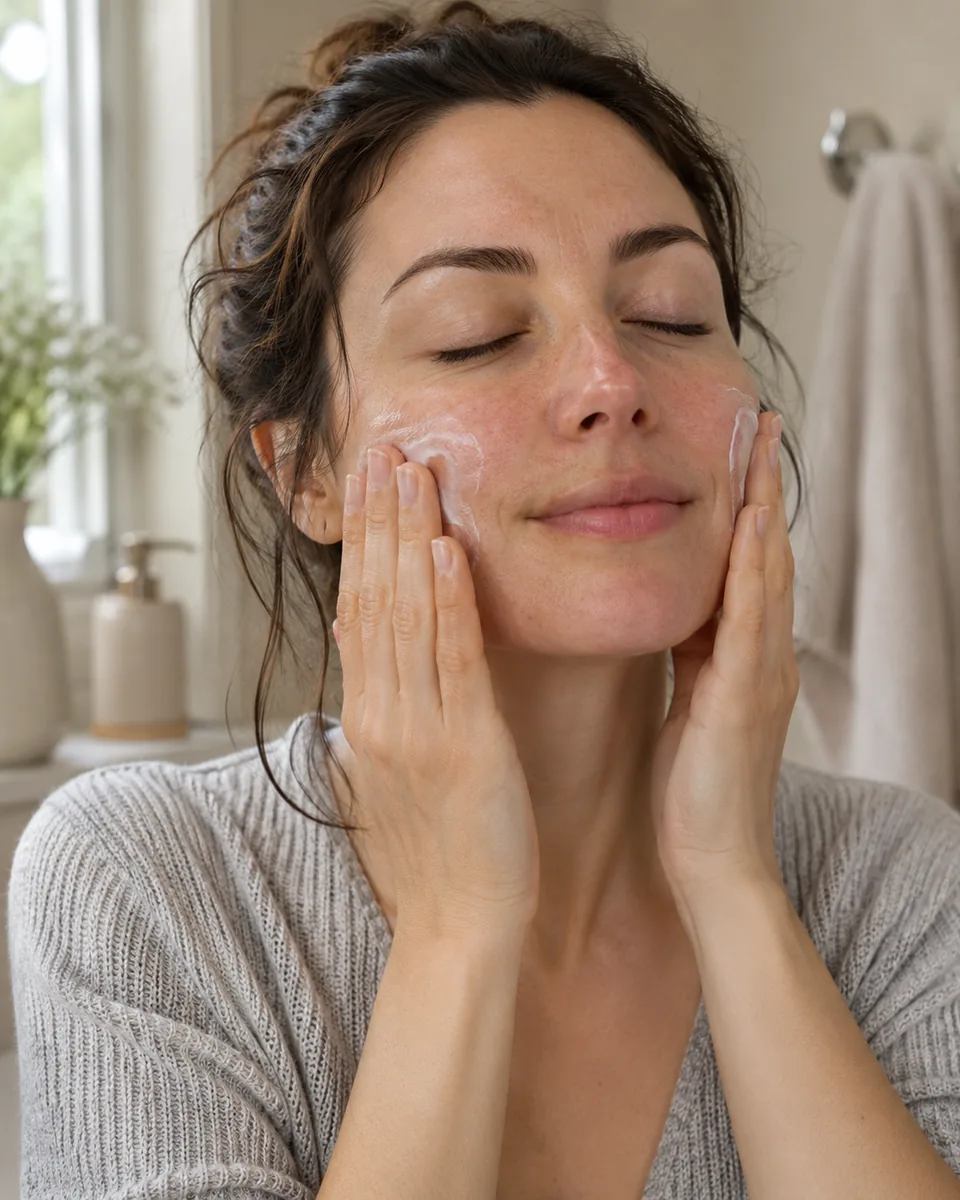
Damaged skin barrier signs are easy to miss at first. A product that never stung before suddenly does. Your face feels tight an hour after moisturizer. Makeup looks patchy. The skin barrier is the outer layer that keeps water in and irritants out, and when it's worn down, skin gets thirsty, touchy and red more easily. The good news is that it usually recovers with gentle, boring care.
What is the skin barrier?
Picture the top layer of your skin as a brick wall. The cells are the bricks, and a mix of fats like ceramides, cholesterol and fatty acids is the mortar between them. When the wall is intact, it holds moisture in and keeps most irritants out. When the mortar wears thin, water escapes faster and things that used to feel fine start to sting.
Every skin type can end up with a worn barrier, oily skin included. In fact, people with oily skin often get there by trying too hard to remove shine. And because the early signs are mild, many keep adding products to fix them, which only makes things worse. Knowing what to look for helps you stop sooner.
Follow redness and moisture
Skin Analysis and Progress in VIPAD show how your skin looks as it settles.
Damaged skin barrier signs and symptoms
Here's what people usually notice. You don't need all of them for your barrier to need a break.
- Stinging or burning from products that used to feel fine, even a plain moisturizer.
- Tightness that comes back soon after you moisturize.
- Redness that shows up quickly, or flushing after washing.
- Rough, flaky or dry patches, sometimes on skin that's otherwise oily.
- A shiny surface that still feels uncomfortable underneath.
- Small bumps or breakouts that don't look like your usual ones.
- Dullness, and makeup that clings or separates.
These damaged skin barrier symptoms overlap with other things, from allergies to skin conditions. If anything is painful, swollen, spreading or doesn't settle after a couple of weeks of gentle care, see a doctor.
What damages the skin barrier?
- Too much exfoliating: daily acids, scrubs, peel pads or several actives layered together.
- Starting a retinoid too fast or using it too often.
- Harsh cleansers, washing too often or using hot water.
- Cold wind, dry indoor heat and low humidity.
- Sun without sunscreen.
- Starting lots of new products at the same time.
- Fragrance or other ingredients your skin doesn't get along with.
Moisture barrier repair: a simple routine
Moisture barrier repair is mostly about stopping whatever hurts and giving your skin what it needs to rebuild. Keep it short.
- Pause all actives: exfoliating acids, retinoids, scrubs, peel pads and strong vitamin C serums.
- Cleanse gently once a day, in the evening, and just rinse with lukewarm water in the morning.
- Use a fragrance free moisturizer with barrier friendly ingredients like ceramides, cholesterol, fatty acids, glycerin or panthenol.
- Apply it to slightly damp skin, and add a little more wherever your skin feels tight.
- At night, a thin layer of a simple balm on the driest spots helps hold moisture in.
- Wear a gentle sunscreen every morning. Many people find mineral formulas calmer on touchy skin.
- Pat, don't rub. Skip hot water, steam and face tools for now.
Try not to buy a pile of new repair products. Fewer products means fewer chances to upset skin that's already upset.
How long does it take to repair the skin barrier?
For mild damage, like a few nights of too much acid, many people feel calmer within a few days and see a clear difference in about two weeks. A more worn barrier usually needs two to four weeks of steady, gentle care, sometimes longer. Skin renews its surface over weeks, so patience matters more than any single product.
Signs it's healing: products stop stinging, tightness fades and redness settles. If things get worse instead, or nothing changes after a few weeks, see a doctor.
How to bring actives back
- Wait until your skin has felt fully comfortable for at least a week.
- Bring back one active at a time, two or three evenings a week at first.
- Don't restart an exfoliant and a retinoid in the same week.
- Patch test on a small area, and stop at the first sign of stinging.
Watch redness and moisture in VIPAD
When your barrier is upset, it's hard to tell day by day whether things are getting better. Skin Analysis in VIPAD reads eight things from one selfie, including redness and moisture, each scored from 0 to 100 and shown as Room to improve, Moderate, Good or Very good. VIPAD doesn't diagnose or treat anything and isn't a medical device. Repeating the analysis the same way, in the same light, simply gives you a steadier record than memory.
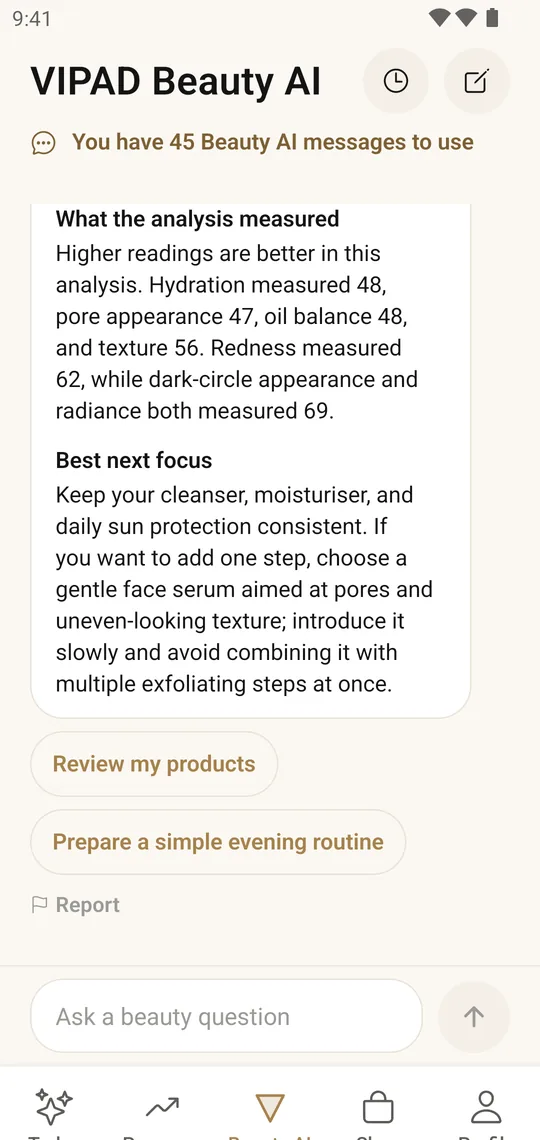
Ask about your skin
Beauty AI explains your readings and answers based on the products you actually own.
Beauty AI, the personal esthetician chat in VIPAD, knows your Beauty Profile, your analysis results, your products and your routines. Ask it which of your products to pause while your skin settles, or how to bring a retinoid back slowly. Progress then compares your results over 1, 3, 6 and 12 months, so you can see redness and moisture move as the damaged skin barrier signs fade.
Can a damaged skin barrier cause breakouts?
It can play a part. Irritated, dehydrated skin often looks bumpier and more congested. Calming it first tends to help more than adding another spot product on top.
Is a damaged barrier the same as sensitive skin?
Not quite. Some people's skin is easily bothered by nature. A damaged barrier is usually temporary and has a cause, like too many actives or harsh weather, and it can make any skin type act sensitive for a while.
Follow redness and moisture
Skin Analysis and Progress in VIPAD show how your skin looks as it settles.