Dehydrated vs dry skin: how to tell the difference
Dehydrated vs dry skin explained: how to tell which one you have, why oily skin can be dehydrated too, and the simple changes that help each one.
6 min read


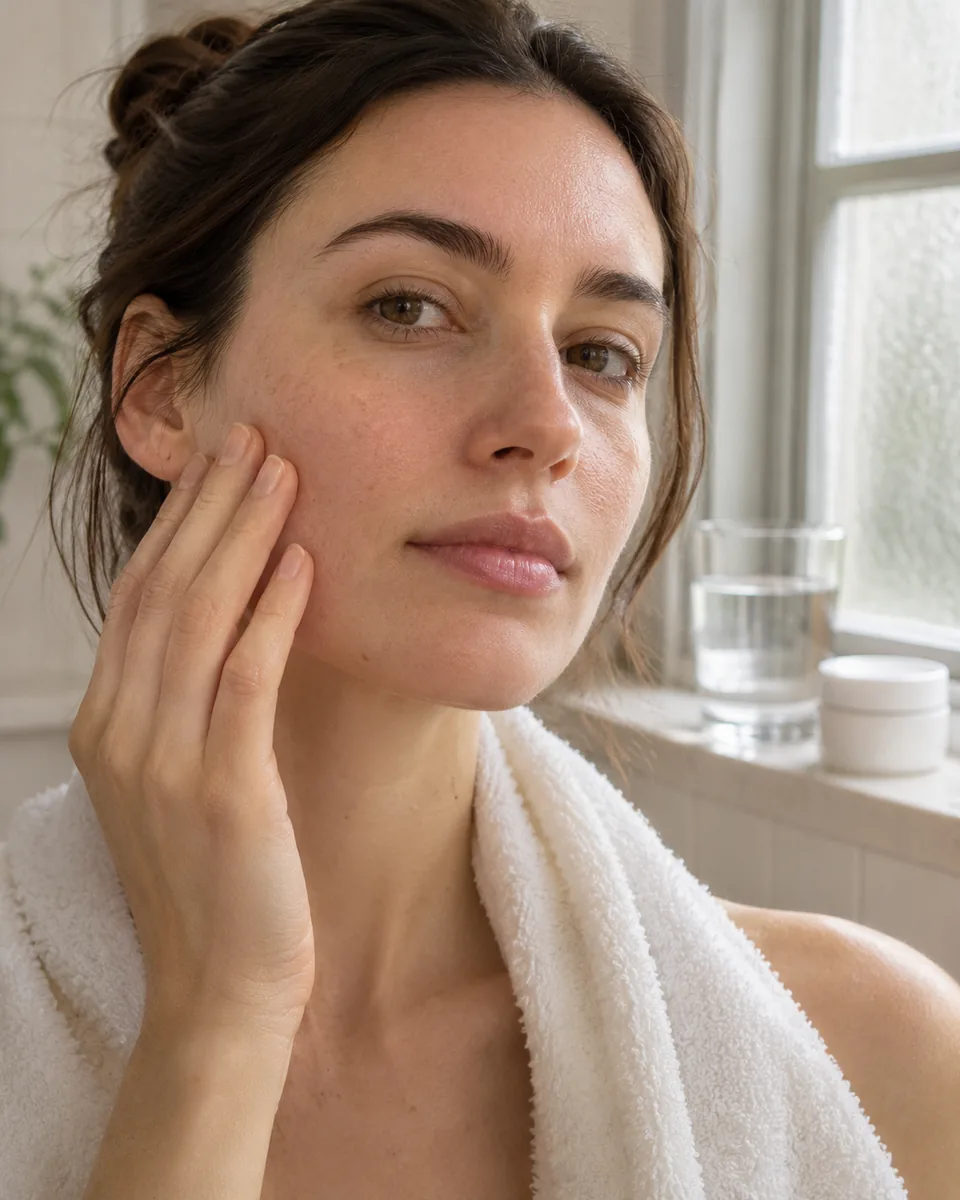
Dehydrated vs dry skin is one of the most confusing questions in skincare, because both can feel tight, look dull and show a few flaky spots. They are not the same thing, though, and they don't need the same fix. One is about water. The other is about oil. Once you know which one you're dealing with, picking products gets a lot easier.
Is dehydrated and dry skin the same?
No. Dry skin is a skin type. It makes less of its own oil, called sebum, so the surface has less of the natural coating that keeps it soft and holds moisture in. It tends to stay that way for years, although age, climate and seasons can shift it.
Dehydrated skin is a temporary state, not a type. It means the top layers are short on water. Any skin type can get dehydrated, oily skin included. Hot showers, dry indoor heat, wind, flights, harsh cleansers and too much exfoliating are common reasons.
An easy way to remember it: dry skin lacks oil, dehydrated skin lacks water. Plenty of people have a bit of both, especially in winter.
See your moisture and oiliness
Skin Analysis in VIPAD reads both from one selfie, and Progress shows how they change.
Dehydrated vs dry skin: the signs side by side
Signs that point to dry skin:
- It feels rough or tight most of the time, not only after washing.
- You see small flakes, often around the nose, brows and cheeks.
- Pores look small and there's very little shine, even by evening.
- Makeup clings to dry patches.
- Rich creams feel comfortable, not heavy.
Signs that point to dehydrated skin:
- Tightness comes and goes, often after cleansing or in dry air.
- Your skin looks dull and tired, even if it also gets shiny.
- Fine lines look more obvious than usual and soften after moisturizer.
- It feels oily on top but tight underneath.
- Products sink in fast and your skin feels thirsty again an hour later.
How to tell which one you have
You don't need special tools. Try these at home over a few days, not just once, because one bad morning can fool you.
- The bare face check: wash with a gentle cleanser, put nothing on and wait an hour. Tight with no shine at all points toward dry. Tight but shiny in the center points toward dehydrated.
- The evening check: look at your skin at the end of the day. Dry skin rarely gets shiny. Dehydrated skin often does.
- The pinch check: gently pinch a little skin on your cheek and let go. If fine creases hang around for a second or two, it may be low on water. Treat this as a rough hint only.
- The season check: if your skin felt fine all summer and turned tight once the heating came on, dehydration is the more likely answer.
If both lists sound like you, that's normal. Dry skin loses water easily, so it gets dehydrated more often than other types.
Can you have dehydrated oily skin?
Yes, and it's more common than people think. Dehydrated oily skin looks shiny but feels tight, a little rough or uncomfortable after washing. It often shows up when someone fights oil too hard: strong foaming cleansers twice a day, drying toners, scrubs, and skipping moisturizer because it feels heavy.
All that stripping lets water escape faster, so the skin feels tighter and looks less smooth, while the shine stays. What usually helps:
- Switch to a gentle gel or low foam cleanser and rinse with lukewarm water.
- Add a light hydrating serum with humectants, ingredients that pull water into the skin, such as glycerin or hyaluronic acid.
- Keep your moisturizer. Just pick a light gel or fluid texture.
- Cut exfoliating back to once or twice a week while your skin feels tight.
- Blot shine during the day instead of washing again.
What helps dry skin
Dry skin needs oil and lipids back on the surface, plus water underneath to soften it.
- Use a cream, milk or balm cleanser instead of a foaming one.
- Apply moisturizer to slightly damp skin, and look for ceramides, squalane, shea butter or other rich, softening ingredients.
- At night, add a richer cream or a few drops of face oil on top.
- Keep showers short and warm, not hot.
- Exfoliate gently and rarely, if at all.
What helps dehydrated skin
- Layer a hydrating serum or essence on damp skin, then seal it in with moisturizer.
- Run a humidifier in a dry bedroom, especially when the heating is on.
- Ease off anything that strips: hot water, harsh cleansers, alcohol heavy toners and daily scrubs.
- Drink water through the day. It won't fix your skin on its own, but it doesn't hurt.
- Wear sunscreen every morning.
Dehydration often responds fast. Many people feel more comfortable within a few days of gentler habits. Dry skin is more of a long game, because you're caring for a type, not fixing a short term problem.
If your skin cracks, bleeds, itches a lot, or stays rough and sore even with gentle care, see a doctor. The same goes for patches that spread or don't settle.
How VIPAD reads moisture and oiliness
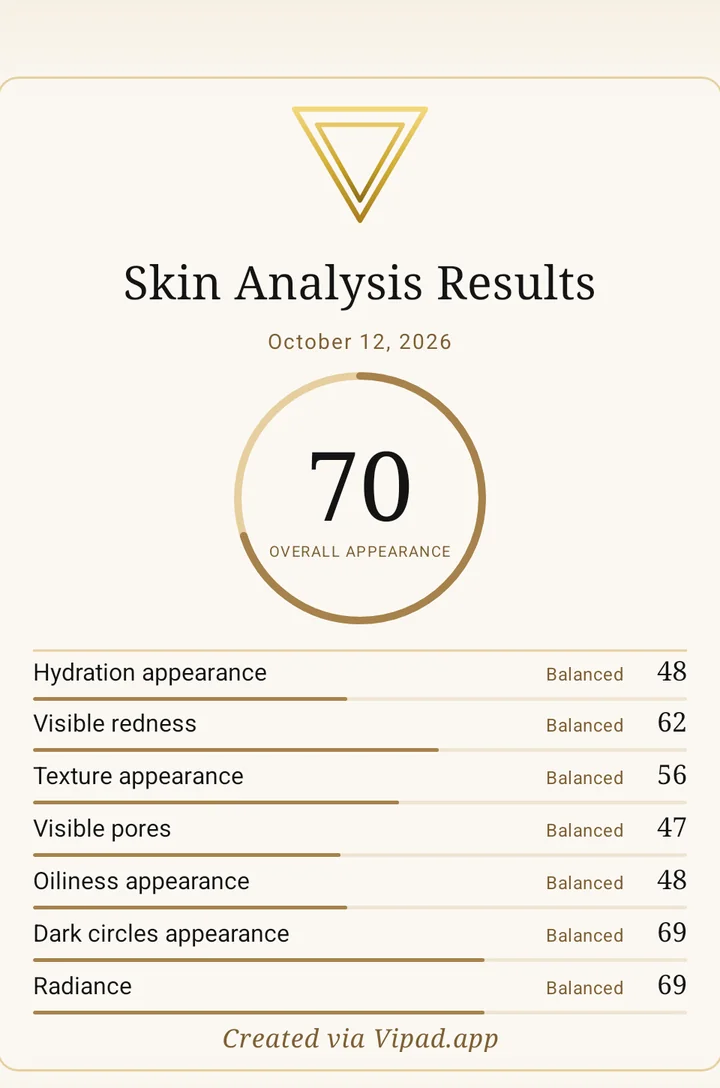
Judging from the mirror is hard, because light, makeup and time of day all change what you see. Skin Analysis in VIPAD reads eight things from one selfie, including moisture and oiliness. Each one gets a score from 0 to 100 and one of four steps: Room to improve, Moderate, Good or Very good.
Two readings together
Moisture and oiliness are separate readings, so you can look at them side by side.
Reading the two together fits the dehydrated vs dry skin question well. Low moisture with low oiliness looks like the dry pattern. Low moisture with higher oiliness looks a lot like dehydrated oily skin. VIPAD doesn't diagnose anything and isn't a medical device. It shows how your skin looks in the photo, so your choices rest on more than a guess.
Take the analysis the same way each time, in the same light, and Progress compares your results over 1, 3, 6 and 12 months. That's how you see whether a gentler cleanser or a new serum actually moved your moisture reading. If you're not sure what to change, ask Beauty AI, the personal esthetician chat in VIPAD. It knows your results and your products and explains them in plain words.
Does drinking water fix dehydrated skin?
It's good for you, but it's rarely enough for your skin on its own. How you wash and what you put on your face usually matter more for how the surface feels.
Can dry skin be dehydrated too?
Yes. Dry skin has less oil to hold water in, so cold, wind and heated rooms dehydrate it easily. Care for both at once: hydrating layers first, then a richer moisturizer on top.
Should dehydrated oily skin skip moisturizer?
No. Skipping it often makes the tightness worse. A light gel or fluid moisturizer gives your skin water and comfort without feeling heavy.
See your moisture and oiliness
Skin Analysis in VIPAD reads both from one selfie, and Progress shows how they change.