How often to exfoliate face skin: a guide by skin type
How often to exfoliate face skin depends on your skin and the product. A simple weekly plan, plus what changes with retinol, sensitive skin and acids.
6 min read



If you are wondering how often to exfoliate face skin, the short answer for most people is one to three times a week. That is less than many people think. Exfoliating clears away the dull top layer so your skin looks smoother and brighter, but doing it too often has the opposite effect: tight, shiny, irritated skin that looks worse, not better.
The right number depends on three things: your skin, the type of exfoliant and what else is in your routine. Here is how to work it out without guessing.
Physical vs chemical exfoliants: what is the difference?
There are two ways to take off the top layer of dead skin. Both work. They just get there differently.
- Physical exfoliants work by rubbing: scrubs with grains, textured cloths, cleansing brushes. You feel them working right away. The risk is pressing too hard, and scrubs with sharp, uneven bits can leave skin scratched and red.
- Chemical exfoliants use acids or enzymes to loosen dead cells so they shed on their own. AHAs such as glycolic, lactic and mandelic acid work on the surface. BHA, which is salicylic acid, also gets into oily pores. PHAs and enzymes are the gentlest of the group.
- Most people find chemical exfoliants easier to control, because the strength is in the formula, not in how hard you rub.
- Pick one exfoliant at a time. A scrub plus an acid plus a peel pad in the same week is how most skin gets overdone.
See what your exfoliant really does
Skin Analysis and Progress in VIPAD follow your smoothness and glow over months.
How often to exfoliate face skin, by skin type
Treat these as starting points. Begin at the low end, stay there for two weeks, and only add a day if your skin stays calm.
- Oily looking skin: two to three times a week. Oily skin usually handles exfoliating best, but shine is not a reason to do it daily.
- Combination skin: two times a week, and you can keep the exfoliant to the shiny center of your face.
- Normal skin: one to two times a week is plenty.
- Dry looking skin: once a week, with a gentle acid like lactic acid, and a rich moisturizer right after.
- Sensitive looking skin: once a week or less. More on that below.
Products made for daily use, like a low strength acid toner or a cleanser with a little salicylic acid, count too. If you use one of those every day, you probably do not need a separate weekly exfoliant on top.
How often to exfoliate when using retinol
Retinol already speeds up how fast your skin renews itself, so it does part of the exfoliating job for you. Stacking both on the same night is the most common reason for flaky, stinging skin.
- Never use retinol and an exfoliating acid or scrub on the same night.
- When you start retinol, pause your exfoliant for the first few weeks until your skin gets used to it.
- After that, one exfoliating night a week on a night without retinol is enough for most people.
- If your skin already looks dry or flaky, skip the exfoliant completely. The retinol is enough.
How often to exfoliate sensitive skin
Sensitive looking skin can still be exfoliated, just gently and rarely. Once a week is a good ceiling, and every ten days or two weeks is fine too.
- Choose the mildest options: PHAs, lactic acid or enzymes rather than strong glycolic acid.
- Skip grainy scrubs and brushes.
- Patch test first on a small area near the jaw for a few days.
- Apply to dry skin, not damp, since damp skin can make acids sting more.
- Follow with a plain, fragrance free moisturizer.
If your skin burns, stays red for days, or feels painful, stop and see a doctor rather than switching to another product.
How often to exfoliate with salicylic acid
Salicylic acid is the exfoliant people reach for when they deal with oily skin, clogged looking pores and breakouts. How often depends on the format.
- Cleansers: they rinse off quickly, so many oily skin types use them once a day. Drier skin does better with a few times a week.
- Leave on toners, serums and pads: start two or three evenings a week. Over the counter versions usually go up to 2 percent.
- Spot use on a single area can be more often, as long as the skin around it stays comfortable.
- Do not pair a leave on salicylic acid with retinol or another acid on the same night.
Signs you are exfoliating too often
Your skin tells you pretty quickly when it has had enough. Watch for:
- Stinging when you apply a plain moisturizer or sunscreen.
- Skin that looks shiny and tight at the same time, almost like plastic.
- New redness, flaking or small bumps.
- Skin that suddenly reacts to products it used to be fine with.
If you see these, stop all exfoliating for a week or two. Keep your routine to a gentle cleanser, moisturizer and sunscreen until your skin feels normal again, then come back at a lower frequency. And wear sunscreen every morning while you exfoliate, since freshly exfoliated skin burns more easily.
How VIPAD helps you find your rhythm
The hard part is knowing whether your exfoliant is actually doing anything, or doing too much. Skin Analysis in VIPAD reads eight things from one selfie, and two of them fit this question well: Smoothness and Glow. Each is scored from 0 to 100 and shown as one of four steps: Room to improve, Moderate, Good or Very good. The Redness and Moisture readings are worth a look too, since overdoing it often shows up there first.
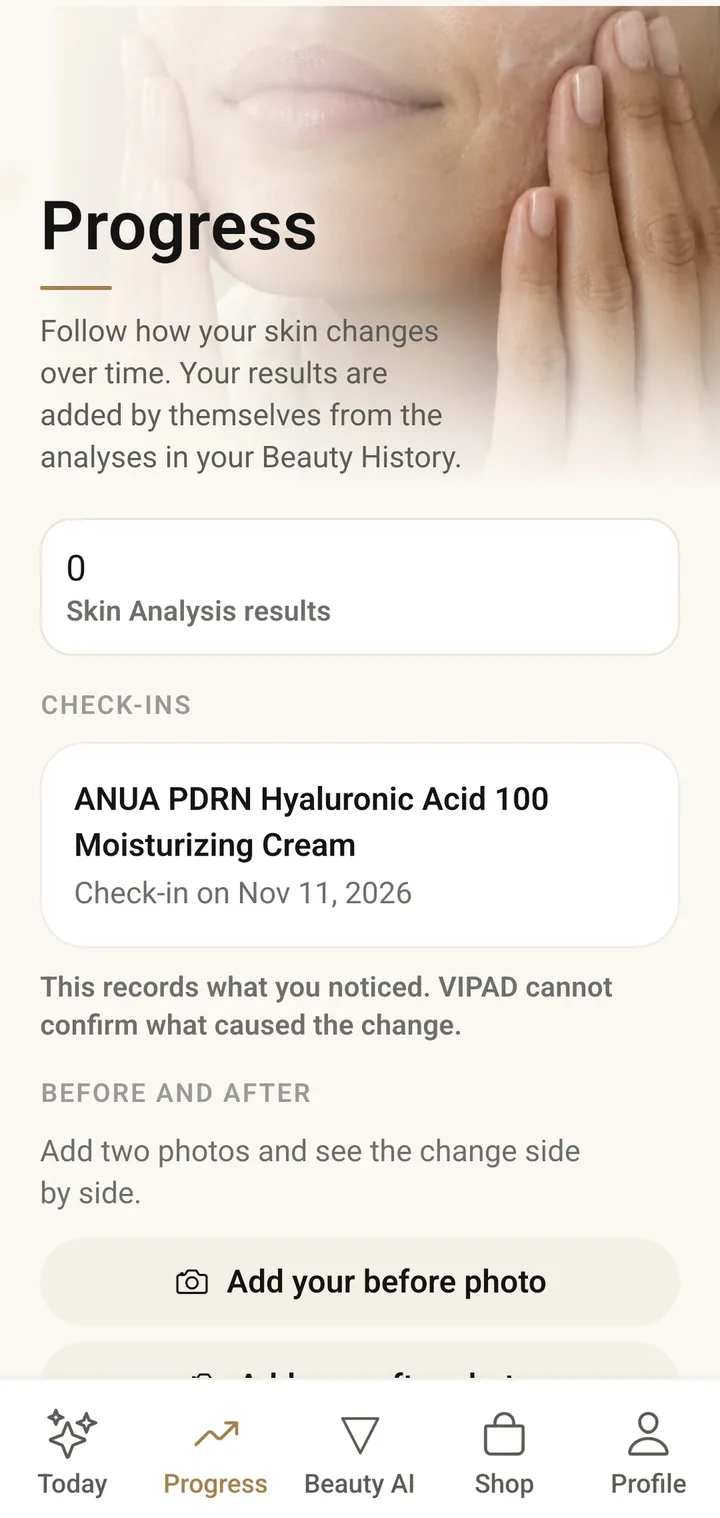
Take a Skin Analysis before you start or change your exfoliating schedule, then repeat it the same way, in the same light. Progress compares your results over 1, 3, 6 and 12 months, so you can see whether smoothness and glow move up while redness stays steady.
In the app
Progress puts your results side by side, so a new exfoliating routine gets a fair test.
Add the exfoliant to My Products to keep the date you opened it and mark later whether it worked for you. If you are unsure how to fit it next to retinol or other actives, ask Beauty AI. It already knows your products, routines and results. VIPAD gives cosmetic guidance only and does not diagnose skin conditions.
Can I exfoliate my face every day?
Only with products made for daily use, like a very mild acid toner or cleanser, and only if your skin stays comfortable. With scrubs and stronger acids, daily is too much for almost everyone.
Should I exfoliate in the morning or at night?
Night is usually easier. Your skin gets time to settle before sun exposure, and you can follow with a richer moisturizer. If you exfoliate in the morning, sunscreen is not optional.
How long until I see a difference?
Skin often feels smoother after the first use, but a visible change in texture and glow usually takes four to eight weeks of steady use. So when you figure out how often to exfoliate face skin, give that schedule at least a month before you judge it.
See what your exfoliant really does
Skin Analysis and Progress in VIPAD follow your smoothness and glow over months.