How to choose the best AI skin analysis app
What to look for in an AI skin analysis app: clear readings, plain words, consistency, privacy and a next step, and how VIPAD Skin Analysis meets each point.
5 min read



An AI skin analysis app promises to tell you something about your skin from a photo. Many can produce a score. Far fewer can tell you what the score means, give you the same answer under the same conditions, keep your photo private and help you decide what to do next.
Those last four points are what separate a useful tool from one you try once and forget. Here is how to judge any skin analysis app, and how Skin Analysis in VIPAD handles each criterion.
1. Readings you can tell apart
A single overall skin score hides more than it shows. Two people with the same overall number can have completely different skin: one shiny with visible pores, the other dry with uneven texture. A good app breaks the result into separate readings, each about one thing you can see.
Skin Analysis in VIPAD gives seven readings from one photo: moisture, visible redness, texture, pores, oiliness, dark circles and radiance. Each one is scored from 0 to 100, so you can see at a glance which areas look strong and which deserve attention.
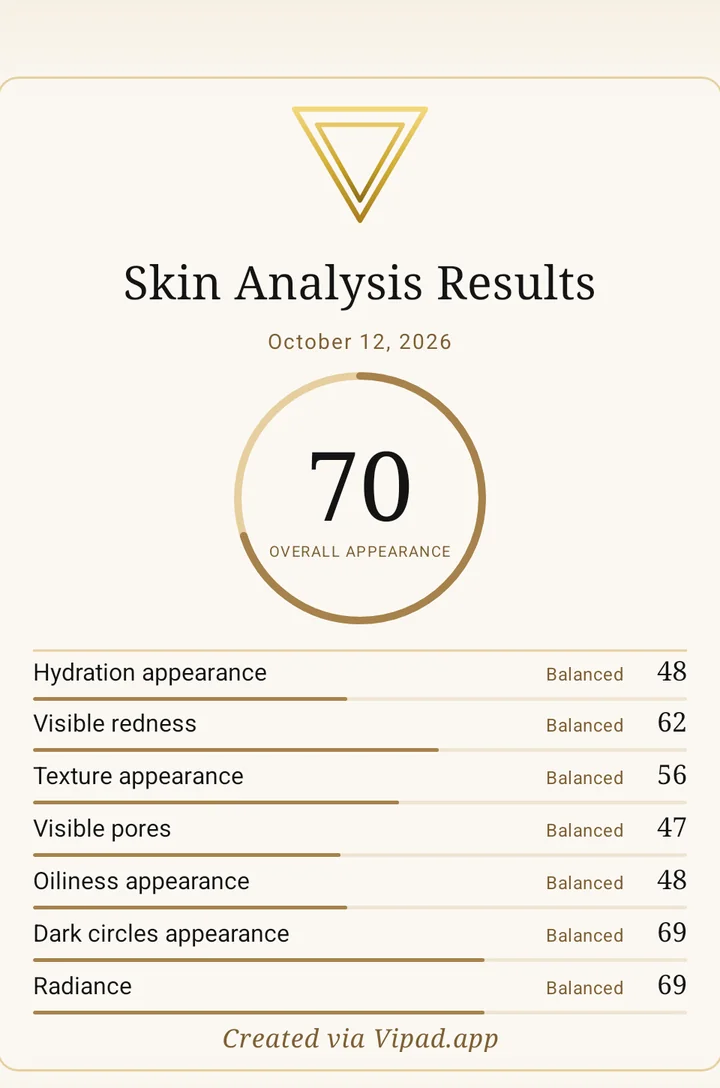
One photo, seven readings
Seven readings from one photo, each with its own score from 0 to 100.
Seven readings, explained
Skin Analysis, Beauty AI and Progress work together in VIPAD.
2. Explanations in plain words
A number with no explanation leaves you guessing. Is 62 for texture good? What does a low radiance reading actually describe? Look for an app that tells you, in everyday language, what each reading measured and what it means for you.
In VIPAD every reading comes with a plain explanation. The result also names your strongest reading and what to focus on, which is often more useful than the full list. Starting with one or two priorities is easier to act on than trying to improve seven things at once.
Separate readings also lead to different choices. A low moisture reading and a high oiliness reading both describe how your skin looks, yet they point toward different textures and different steps in a routine. One combined score would blur that difference.
How to read a score without worrying
- Compare yourself with yourself: a reading is most useful next to your own earlier readings, not next to someone else.
- Look for direction, not single points: a small move between two photos can come from light alone.
- Read the explanation before the number: it tells you what the reading actually looked at.
- Treat a low reading as a focus, not a verdict: it shows where a little care may help first.
3. Consistency and honesty about limits
Any app that reads a photo is reading light. The same face can look shinier under one lamp and duller under another. A trustworthy app admits this openly, instead of presenting every result as a fixed truth about your skin.
VIPAD states the limit before you start: Skin Analysis reads one photo taken in one light, and lighting, makeup and the angle of your face change the answer. That honesty is useful, because it tells you exactly what to keep the same when you want to compare results.
4. Privacy you can verify
A face photo is personal data. Before uploading one, check who can see it, where results are kept and whether you can remove them. If an app makes deletion hard to find, take that as a warning sign.
- Results go to your own Beauty History, never to a public feed.
- Nobody else can see your photos or results.
- You can delete a single result, a conversation or your whole account at any time.
- Only the results you approve go into your Beauty Profile, and those are the only results Beauty AI works from.
5. A clear next step
The most common problem with skin scanners is what happens after the reading: nothing. You see your numbers, close the app and carry on as before. A good app connects the reading to your routine, your products and a way to check whether anything changed.
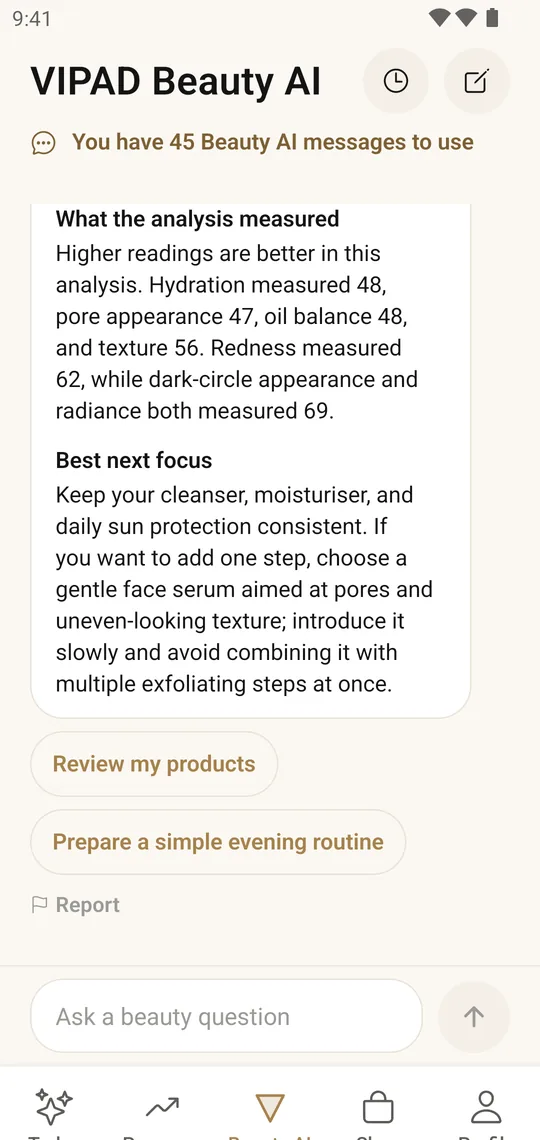
This is where VIPAD's tools work together. Once a result is in your Beauty Profile, Beauty AI can explain it, suggest what to focus on and draft a routine from the products already in My Products. Skin Care Plan uses the same reading, together with your goals and your own products, to set out morning and evening steps. Later results then appear in Progress, which compares them over 1, 3, 6 or 12 months.
After the reading
After the reading, Beauty AI explains it in plain words and suggests one area to start with.
A fair price, shown first
Look for an app that shows the cost of an analysis before it runs and does not tie you to a monthly plan. VIPAD has no subscription. You buy VIPAD Credits in packs from 10 to 500 and spend them on tools, and the price of Skin Analysis appears before it runs.
If the analysis cannot finish, your Credits are returned. Each pack also includes Lifetime No Ads, and each Credit includes one Beauty AI message for questions about your result.
Taking photos you can compare
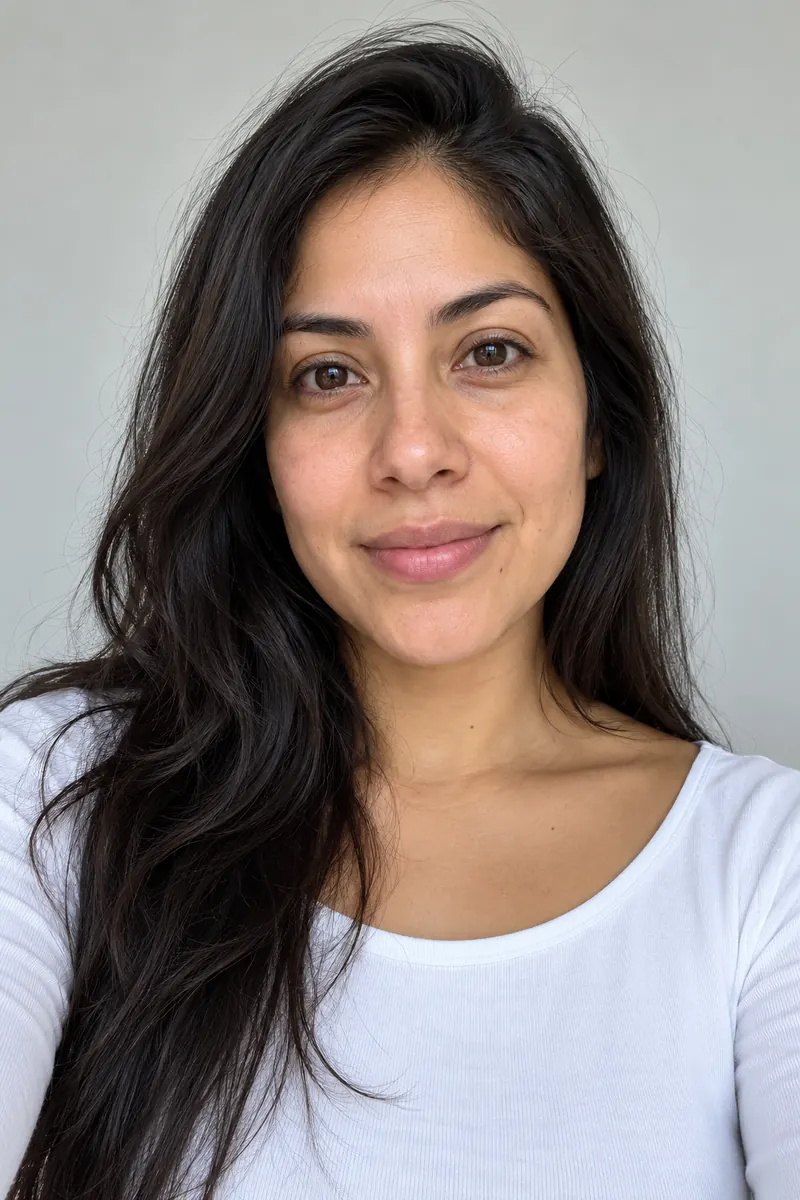
Our guide to skin analysis from one selfie covers how to set up a single good photo. When you plan to compare results over months, one more habit matters: keep a fixed photo ritual, so that the only thing that changes between photos is your skin.
- Pick one spot at home with steady daylight and use it every time.
- Choose one moment in your day, such as after your morning cleanse, before any products.
- Wait the same few minutes after washing, since freshly washed skin can look redder.
- Leave the camera on its normal setting, without filters or beauty modes.
- Note anything unusual, such as a short night or a new product, so you can read the result in context.
Same light, same time
A steady photo ritual makes results from different months fair to compare.
Do not try to raise your score with flattering light. A photo taken in softer light than usual can make your readings look better for one day, but it ruins the comparison you are building.
What a skin analysis app is not
Even the best skin analysis app describes appearance. It does not diagnose, treat or replace a dermatologist, and VIPAD is no exception: it gives cosmetic and beauty guidance and is not a medical device. If something on your skin worries you, hurts or keeps changing, see a professional in person.
Your quick checklist
- Separate readings, not one mystery score.
- A plain explanation for each reading.
- Open limits about light, makeup and angle.
- Private results that you can delete yourself.
- A next step that uses your own products and routine.
- A way to compare results over months.
- A price you see before you pay.
An app that meets every point is worth your photo. Skin Analysis in VIPAD was designed around these points, and the rest of the app is built to use what it finds.
Seven readings, explained
Skin Analysis, Beauty AI and Progress work together in VIPAD.