How to build a skincare routine for your skin type
A practical routine for dry, oily, combination and sensitive looking skin, built from product types and techniques, plus how to add new products the right way.
5 min read



The same routine can feel perfect on one person and wrong on another. A rich cream that comforts dry skin can feel heavy on oily skin, and a foaming cleanser that leaves oily skin fresh can leave dry skin tight. Starting from how your skin behaves saves you a lot of trial and error.
This guide works with product types and techniques, not brands. It describes how skin looks and feels, which is the right level for everyday care. It is not medical advice.
First, read your skin at home
Wash your face with a gentle cleanser, pat it dry and apply nothing. Wait about an hour, then look at your skin in daylight and notice how it feels.
- Tight, a little rough or flaky: your skin looks dry.
- Shiny across the forehead, nose, chin and cheeks: your skin looks oily.
- Shiny in the center of the face but comfortable or dry on the cheeks: your skin looks combination.
- Pink, warm or prickly, or it often reacts to new products: your skin looks sensitive.
Skin type is not fixed for life. Weather, heating, age and your current products all shift it, so it is worth checking again when the seasons change.
A routine that fits your skin
Beauty AI, My Products and Routines help you build it in VIPAD.
Skin type and skin goals are different things
Your skin type describes how your skin behaves overall. A goal is something you want to improve, such as smoother texture or more radiance. You can have oily looking skin and still want more moisture in some areas, or dry looking skin with visible pores on the nose.
Build the base of your routine around your type first. Then add one product for one goal, and only once the base feels comfortable.
A routine for dry looking skin
Dry looking skin needs two things: water in the surface and something that keeps it there. The aim is comfort that lasts all day.
- Cleanse with a cream, milk or balm cleanser, and use lukewarm water rather than hot.
- Apply a hydrating serum or essence to skin that is still slightly damp.
- Follow with a cream moisturizer while the skin still feels soft.
- At night, seal everything in with a richer cream or a thin layer of face oil.
- Use sunscreen every morning, and choose a creamy formula if matte ones feel tight.
- Exfoliate gently and rarely, since overdoing it adds to the roughness.
A routine for oily looking skin
Oily looking skin still needs moisture. Stripping it with harsh products can leave it tight underneath and shiny on top. The aim is balance, with light textures.
- Cleanse with a gel or light foaming cleanser, twice a day and no more.
- Choose a lightweight gel or fluid moisturizer instead of skipping the step.
- Look for labels such as non comedogenic or oil free if heavy products feel clogging.
- Try a gentle exfoliating product a few evenings a week, if your skin tolerates it.
- Pick a sunscreen with a matte or fluid finish, so you actually enjoy wearing it.
- During the day, blot shine with a tissue instead of washing again.
A routine for combination looking skin
Combination skin is two skin types on one face, so one product does not have to do everything. The technique that helps most is zone care.
- Use one gentle cleanser that suits the whole face, usually a mild gel or a low foam formula.
- Apply a light moisturizer all over, then add a second, thin layer of a richer cream only on dry areas.
- Keep any exfoliating or oil control product to the shiny zone.
- Use a fluid sunscreen that feels light on the center of the face.
A routine for sensitive looking skin
Sensitive looking skin does best with fewer products, gentle textures and patience. The aim is to calm, not to correct.
- Keep the routine short: cleanser, moisturizer and sunscreen are often enough.
- Choose fragrance free products where you can.
- Rinse with cool or lukewarm water and pat dry, never rub.
- Avoid scrubs with grains, and wait before adding strong active products.
- Patch test every new product and stop using anything that stings or burns.
If your skin often reacts, stays red or feels painful, that is a reason to see a dermatologist rather than to try another product.
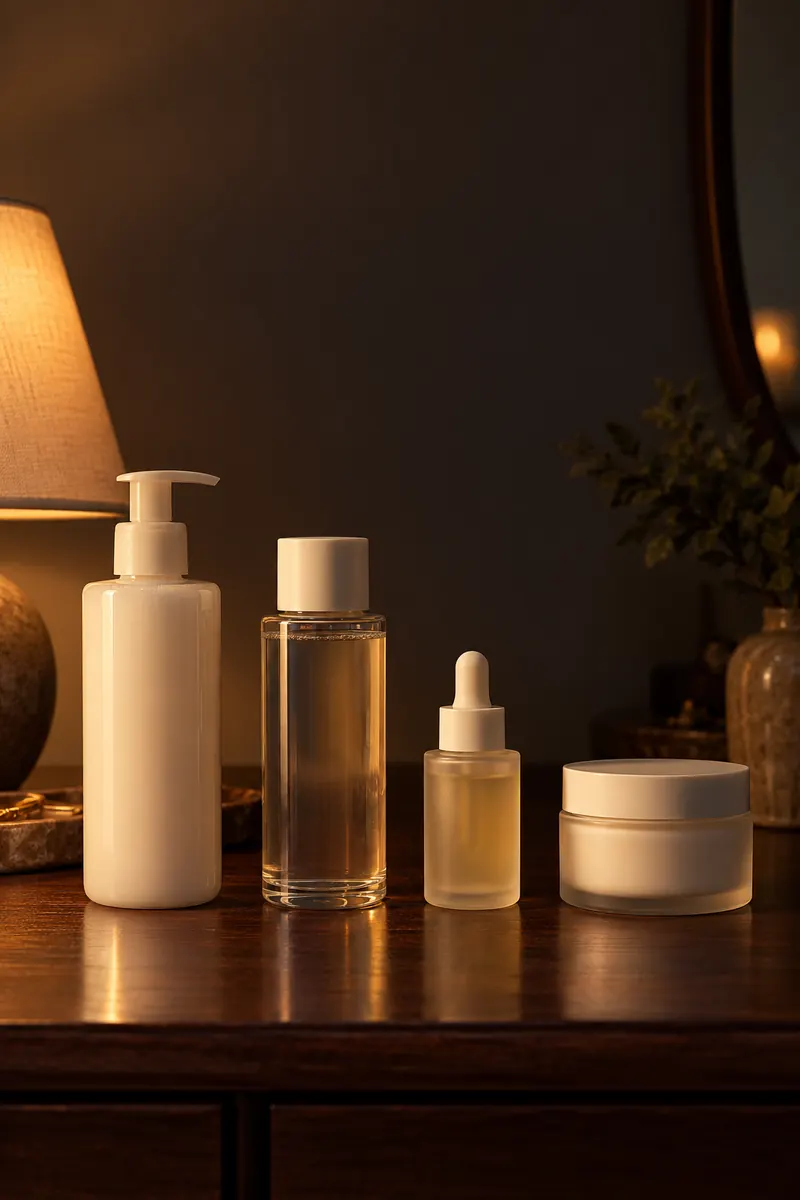
Every skin type
Whatever your skin type, a routine works best with a few products you use every day.
How to introduce a new product
Even a product made for your skin type can disagree with you. Adding it carefully tells you quickly whether it belongs in your routine.
- Replace before you add: let a new product take the place of an old one in the same step, so the routine does not keep growing.
- Try it on a small area first, such as near the jaw, for a few days before using it on the whole face.
- Bring in exfoliants and retinoids two or three evenings a week at first, and not on the same night as each other.
- On sensitive looking skin, give each new product a full week before you add the next one.
- Note the start date, so you know when any change began.
- Stop at once if your skin stings, burns or stays red.
How VIPAD helps you build it
Beauty AI, your personal esthetician in VIPAD, already knows what you have told it about your skin, plus your results, products and routines. If your skin type or your goals are not in your profile yet, it asks about them before it suggests anything. You can ask it which steps your skin type needs, or whether a product you are looking at fits.

Ask first
Beauty AI starts from what it knows about you and asks when something is missing.
Add what you already use to My Products, by photo, several photos or by typing. VIPAD reads each label, and you approve what it found. Beauty AI can then draft a routine from those products, and Routines keeps it as a morning, evening or weekly routine you mark done when you finish.
Your preferences help too. You can set fragrance to fragrance free, light or any, and list ingredients to avoid. Products with those ingredients are never recommended. For a more detailed plan, Skin Care Plan points out steps that repeat each other, steps that may not go together and how to introduce products gradually.
Once a new product joins your routine, you can follow it with a check in after 14, 30 or 60 days and record how it went. For the full picture of how your skin looks, Skin Analysis adds seven readings from one photo, and our guide to building a routine from what you own covers the basic order of steps.
Keep it simple
The right routine for your skin type is rarely the longest one. Start with the steps above, add new products one at a time and adjust when the seasons change. Your skin will tell you more than any label.
A routine that fits your skin
Beauty AI, My Products and Routines help you build it in VIPAD.