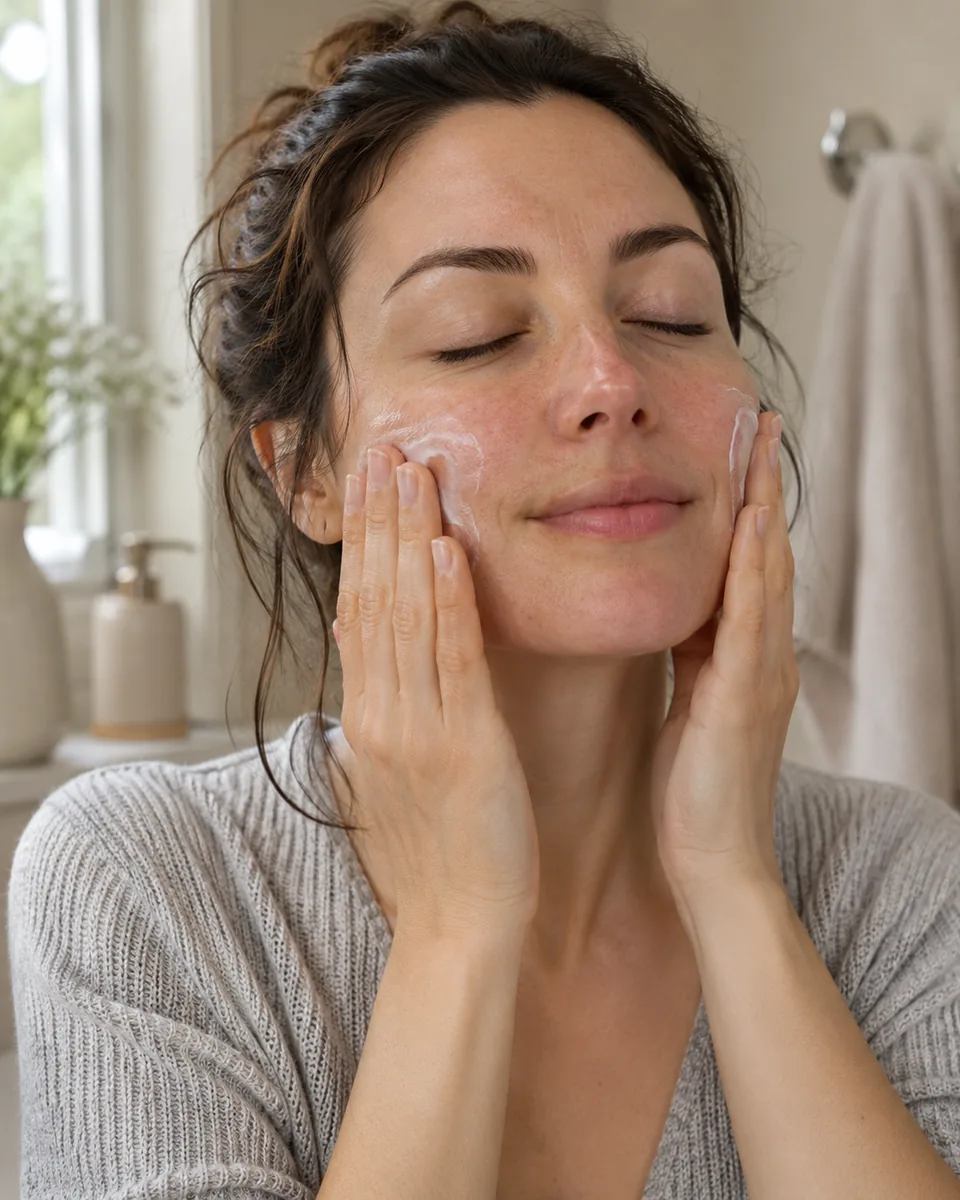
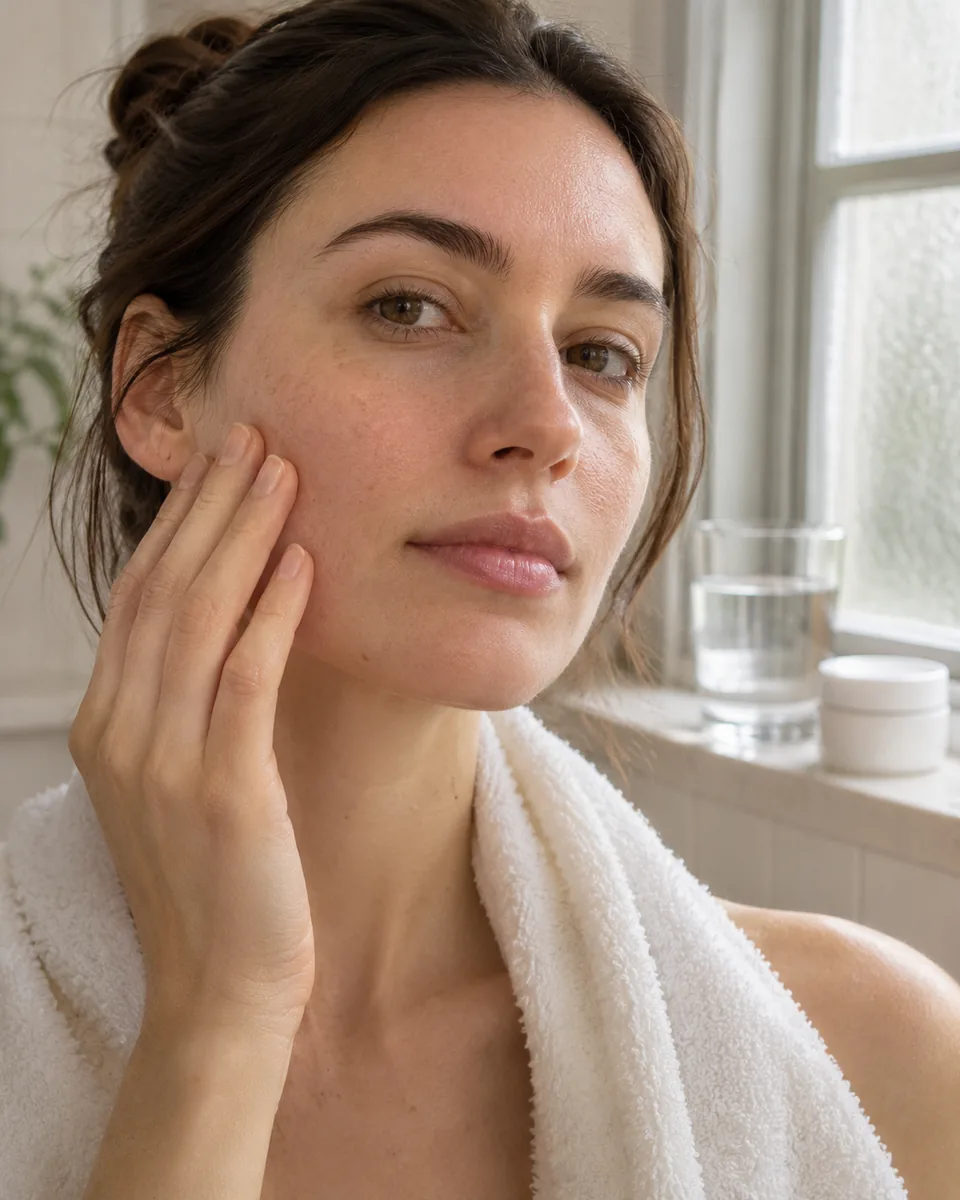
How to reduce redness on face, quickly and at home
How to reduce redness on face skin, quickly and at home: cool water, gentle products, sunscreen, red marks from acne, and when it's time to see a doctor.
6 min read


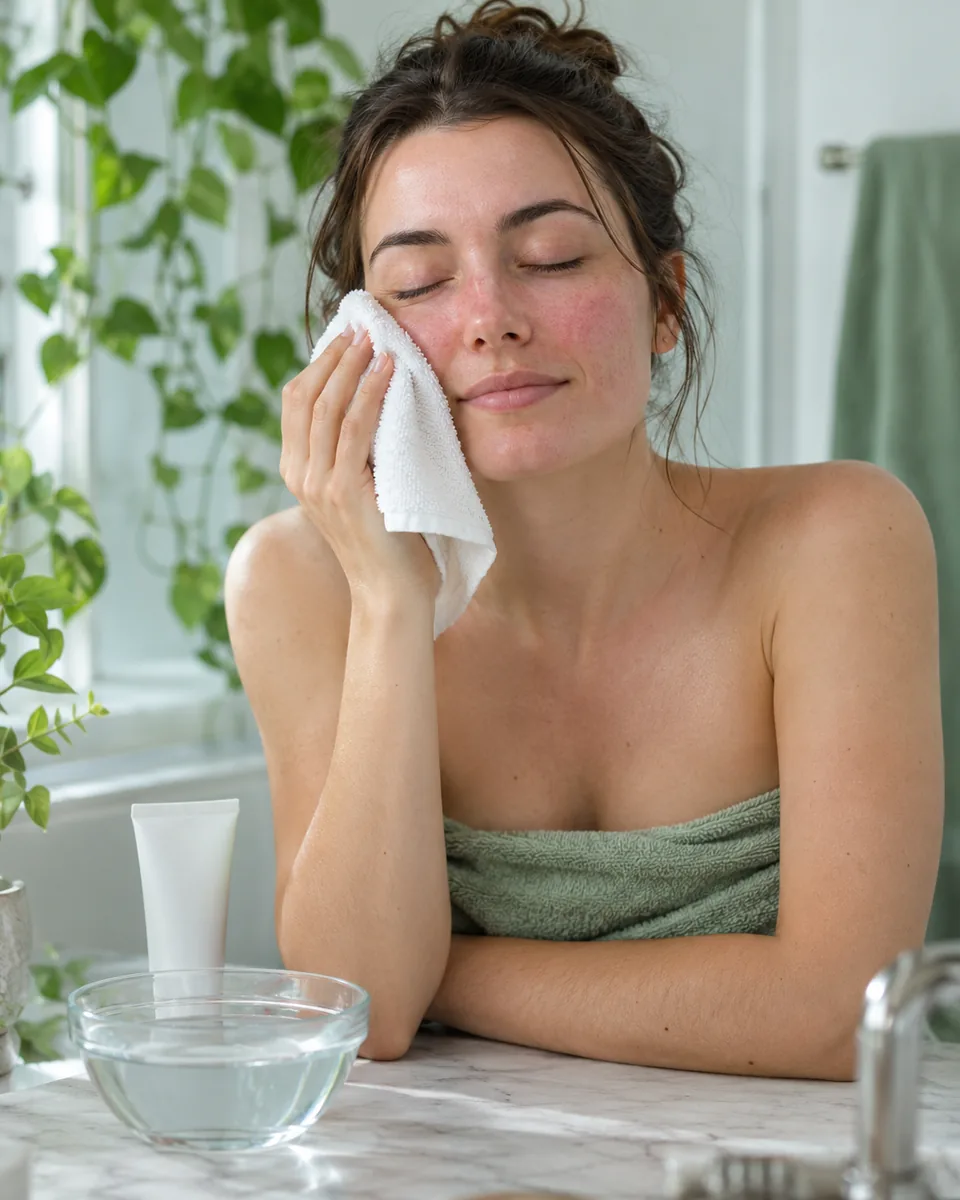
Most advice on how to reduce redness on face skin comes down to two jobs: calm it down today, and stop feeding it every day after that. Both are simpler than they sound. A lot of redness comes from heat, friction and products that are a little too strong for your skin.
This is general cosmetic advice, not medical advice. If your redness is painful, burning, swollen, spreading or doesn't settle, see a doctor.
What makes a face look red
- Heat: hot showers, saunas, workouts, hot drinks and a warm room.
- Weather: wind, cold air and sun.
- Products: fragrance, strong acids, retinoids, or too many actives at once.
- Friction: scrubbing, rough towels and rubbing your face.
- Food and drink: spicy food and alcohol make some people flush.
- Old spots: red marks that stay after a pimple has healed.
It helps to notice your own pattern. If you go red after the gym, that needs a different fix than redness that shows up after a new serum.
Keep an eye on redness
The Redness reading and Beauty AI in VIPAD help you see what calms your skin.
How to reduce redness on face quickly
- Splash your face with cool water, or hold a cool, damp cloth on it for a few minutes.
- Don't put ice straight on your skin. Wrap it in a cloth if you use it at all.
- Get out of the heat and the sun, and let your face rest.
- Skip any acids, retinoids or scrubs for now.
- Apply a plain, fragrance free moisturizer to calm the tight feeling.
- Keep your hands off. Touching and rubbing make it last longer.
Need to look calm for an event? A green tinted primer or concealer cancels out red before foundation. Pat it on only where you need it, then blend lightly.
How to reduce redness at home, day to day
Quick fixes help for an hour. Long term calm comes from a routine that stops irritating your skin.
- Wash with lukewarm water, never hot, and pat dry with a soft towel.
- Use a gentle, fragrance free cleanser that leaves skin comfortable, not squeaky.
- Moisturize twice a day. Ingredients such as ceramides, glycerin, niacinamide, oat and centella are often found in calming formulas.
- Exfoliate less. Once a week, or a break for a few weeks, is plenty when skin looks red.
- Patch test every new product on a small area for a few days first.
- Wear sunscreen every morning. Many people with sensitive looking skin find mineral formulas gentler.
- Keep your routine short. Fewer products means fewer things that can sting.
How to reduce redness from acne
Red or pink marks often stay behind after a spot heals. They are common and usually fade on their own over weeks to months. You can help them along by leaving spots alone, since picking makes the mark deeper and longer lasting. Daily sunscreen matters here too, because sun can make marks look darker and last longer.
For spots that are still active, keep things gentle. Drying a spot out with harsh products often leaves more redness around it. If your spots are deep, sore or leave marks that don't fade after several months, a doctor can tell you what is going on and what fits your skin.
When redness needs a doctor
- It hurts, burns, itches badly or swells.
- It is spreading or comes with bumps you can't explain.
- Flushing keeps coming back and stays longer each time.
- Your eyes feel gritty or irritated along with it.
- It doesn't settle after two weeks of a plain, gentle routine.
Facial redness that won't go away can have medical causes, and only a doctor can tell you what it is. Gentle care at home is a good start, not a replacement for that visit.
Follow your Redness reading in VIPAD
Redness changes from day to day, so a single look in the mirror can fool you. In VIPAD, Skin Analysis reads eight things from one selfie, and one of them is Redness. You get a score from 0 to 100 and one of four steps: Room to improve, Moderate, Good or Very good. It is a cosmetic reading of how red your skin looks in that photo. It does not diagnose or detect any condition.
Take the analysis in the same light each time, and Progress compares your results over 1, 3, 6 and 12 months. That makes it easier to see whether a gentler routine is actually helping.
Beauty AI is the chat in VIPAD, a personal esthetician that knows your Beauty Profile, your analysis results, your products and your routines. You can ask it something like: my cheeks went red after I added a new serum, what should I pause? It answers with your own products in mind. If a product didn't work for you, mark it in My Products, and VIPAD remembers.
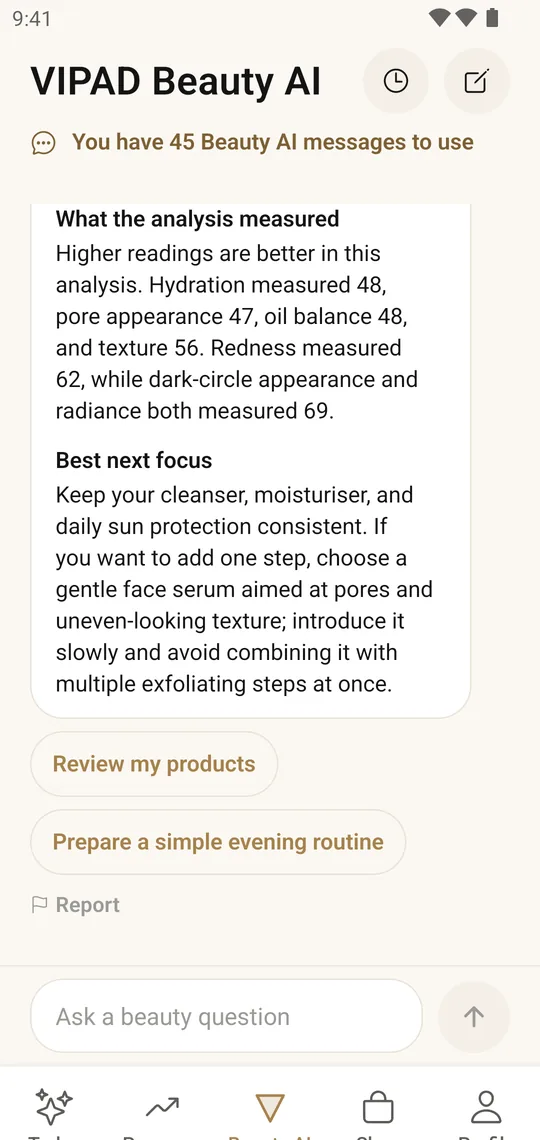
Ask about your skin
Beauty AI answers with your own readings and products in mind.
How long does redness take to go down?
Redness from heat or a workout usually fades within an hour. Redness from an irritating product can take a few days to a couple of weeks once you stop using it. Red marks from old spots can take months.
Does cold water help redness?
Yes, for a quick calm. Cool water or a cool cloth feels soothing and can take the heat out of your skin. Keep it cool rather than icy, and pat dry gently afterward. That is the simplest first step in how to reduce redness on face skin at home.
Keep an eye on redness
The Redness reading and Beauty AI in VIPAD help you see what calms your skin.