Can AI really analyze your skin? An honest look
What a phone camera and AI can and cannot see on your skin, why light changes the answer, and how a cosmetic reading differs from a medical diagnosis.
5 min read



Skin analysis apps are everywhere, and it is fair to be skeptical. Can software really tell anything about your skin from a selfie? The honest answer is yes, within clear limits. Knowing those limits is what lets you use a reading well instead of trusting it too much or dismissing it entirely.
What a camera actually records
A phone camera does not touch your skin or look beneath it. It records light: how much light your skin reflects, in which colors, and where shadows fall. Everything an AI reads from a photo comes from those patterns of color, brightness and shadow.
That sounds limited, but a lot of what people notice about skin is exactly this. When you say your skin looks dull, shiny, red or uneven, you are also describing light on a surface. AI can read those visible qualities in the same way each time, which a tired eye in a bathroom mirror often cannot.
A cosmetic reading, honestly explained
Skin Analysis in VIPAD tells you what it reads and what it cannot.
What AI can read well from a photo
- Redness: areas where the skin shows more red than the surrounding tone.
- Shine: bright reflections that suggest oiliness on the surface.
- Visible pores: how noticeable pores are at the distance of the photo.
- Surface texture: how smooth or uneven the surface looks under the light.
- Shadow under the eyes: how dark the area below the eyes appears.
- Radiance: how evenly and brightly the skin reflects light.
- How plump the surface looks, which is often read as a sign of moisture.
Notice the wording: looks, appears, visible. Each of these is a reading of appearance. A moisture reading describes how hydrated the surface looks in the photo, not a lab measurement of water in your skin.
What a camera cannot see
- Anything beneath the surface, such as what is happening in deeper layers of the skin.
- How your skin feels: tightness, itching, stinging or tenderness.
- The cause of what it sees: redness after a hot shower and redness that never fades can look alike in one photo.
- Your history: allergies, medication, hormones, sleep or stress.
- Whether a spot, mole or mark is harmless. That needs a trained professional, in person.
This is why a good skin app asks you questions as well as reading your photo. Your own answers fill in what light alone cannot show.
Why lighting changes everything
Because the camera reads light, the light itself becomes part of the result. Change the light and the same skin produces a different picture, and so a different reading.
- Warm bulbs push skin toward yellow and can hide redness.
- Cool, bluish light can make skin look paler and dark circles stronger.
- Overhead light casts shadows under the eyes and in pores, so texture looks rougher.
- Side light, from a window beside you, exaggerates every bump on one half of the face.
- Direct sun creates hard highlights that look like extra shine.
- Beauty filters and smoothing modes erase the very details the analysis needs.
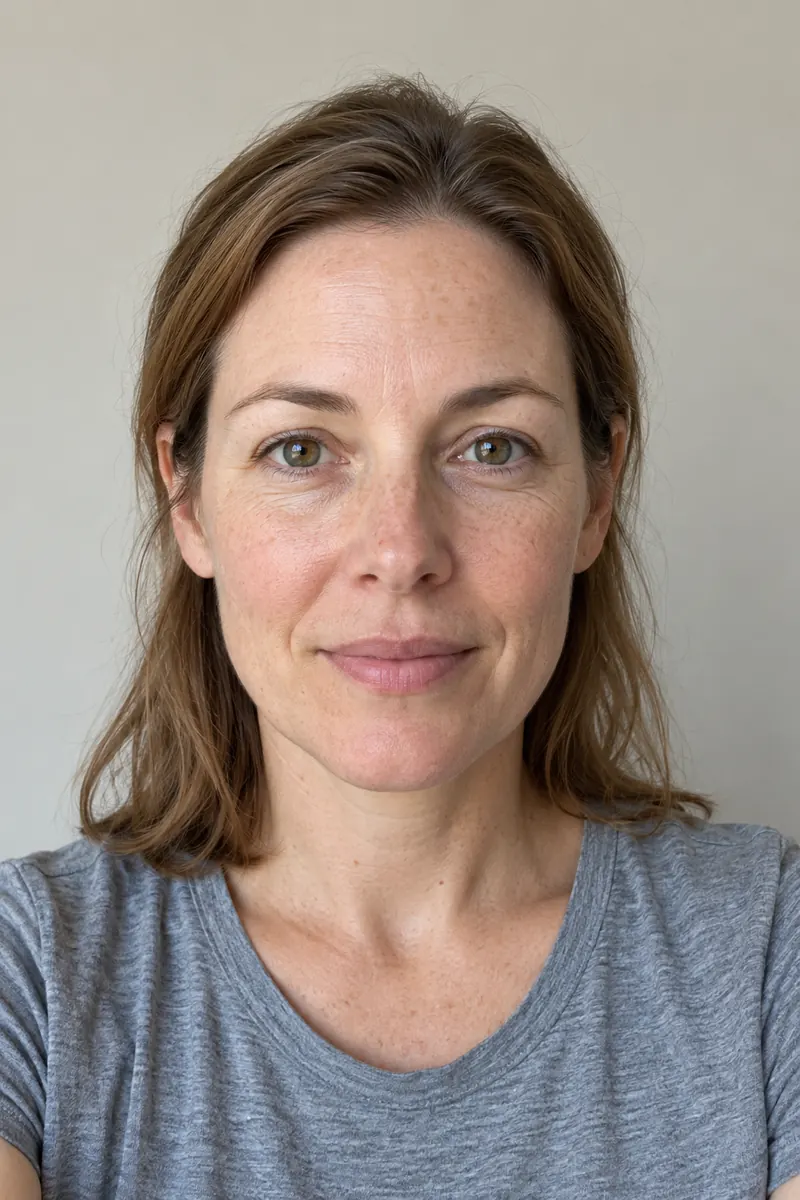
Light is data
Soft, even light from the front gives the camera the fairest view of your skin.
Makeup and angle matter in the same way. Foundation covers redness, highlighter adds radiance and a tilted face changes how shadows fall. For practical setup steps, see our guide to skin analysis from one selfie.
Why your readings move from day to day
Even with perfect light, your skin itself is not the same every day. A short night, a warm shower, a workout, cold wind or a long flight can all change how your skin looks for a few hours or a few days.
So a reading that moves a little between two photos is not a sign that the app is broken, or that your routine failed. It is a reminder to judge trends over weeks and months, and to note anything unusual about the day you took the photo.
A cosmetic reading is not a diagnosis
This is the most important distinction. A cosmetic reading describes how your skin looks, so you can make choices about care and products. A medical diagnosis identifies a condition and its cause, and only a qualified professional can make one, usually after examining you and asking about your history.
An app can say that redness looks higher than in your last photo. It cannot tell you why, and it should never name a skin condition or suggest a medical treatment. Treat any app that claims otherwise with caution.
When to see a professional
Use an app for everyday care decisions. Book a dermatologist or doctor when something goes beyond appearance, for example:
- A mole or spot that is new, or that changes in size, shape or color.
- A sore or mark that bleeds or does not heal.
- Redness, a rash or swelling that does not settle, or that spreads.
- Itching, burning or pain that keeps coming back.
- Breakouts that are painful or leave marks.
- Any reaction to a product that does not calm down after you stop using it.
When in doubt, choose the in person visit. A photo reading can wait, and a professional opinion is worth having early.
Where VIPAD fits
VIPAD is built around this honest line. It gives cosmetic and beauty guidance, it is not a medical device, and it does not diagnose or treat. Each tool states its own limit before you start, in plain words.
Skin Analysis returns seven readings from one photo, each scored from 0 to 100 with a short explanation. Its own stated limit matches what this article describes: one photo, one light, and an answer that shifts with lighting, makeup and the angle of your face.
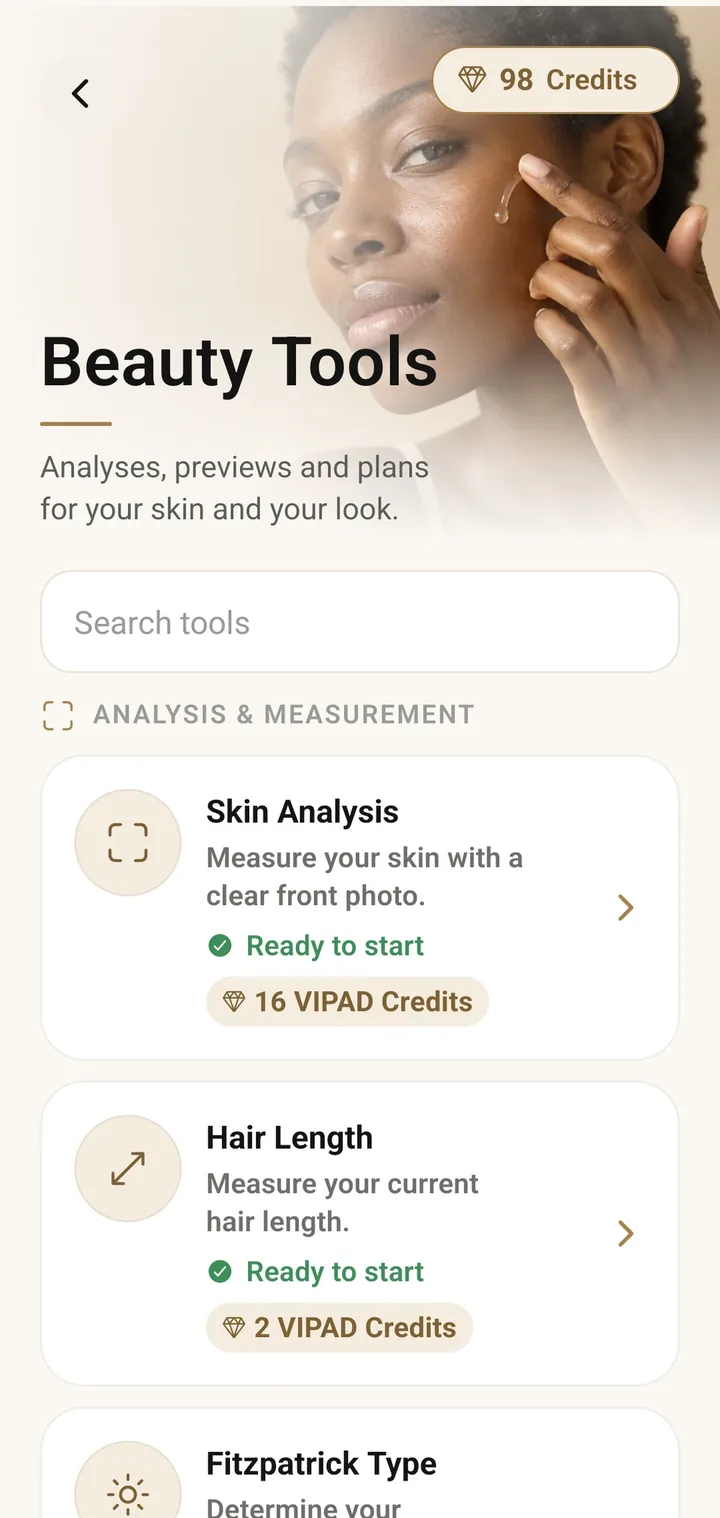
Beauty Tools
Each analysis tool shows its price in Credits before it starts, and explains what it reads.
Fitzpatrick Type places your skin on the six point scale that describes how skin tends to respond to sun, and it says plainly that it describes how your skin looks, not advice about sun, burning or any treatment. Beauty AI notes that it is not a substitute for medical advice, and Skin Care Plan includes a section on when to pause and seek professional advice.
How to get real value from an AI skin reading
- Use it to compare over time: the same light and setup, month after month, shows direction better than any single photo.
- Pair the reading with your own notes about how your skin feels.
- Pick one focus from the result rather than reacting to every number.
- Let it guide care choices, not health decisions.
In VIPAD, Progress puts your Skin Analysis results side by side over 1, 3, 6 or 12 months, and no result joins your Beauty Profile unless you choose to add it. Used this way, an AI skin reading is a clear, private record of how your skin looks, and a better starting point for your routine than a guess.
A cosmetic reading, honestly explained
Skin Analysis in VIPAD tells you what it reads and what it cannot.