Skincare products you do not need, and how to spot them
How to spot skincare products you do not need, from duplicates to trends that do not suit your skin, plus a simple core routine, sorted by product category.
5 min read



A crowded shelf is not a sign of a good routine. More often it means the same job is being done three times, a trend was bought and forgotten, and the product that really works is hidden at the back. Cutting back saves money, and it helps your skin too: fewer products mean fewer chances of irritation and a clearer view of what is actually doing the work.
Start with the job, not the product
Every product on your shelf should have one clear job. Take each one and name its job: cleanse, hydrate, protect from the sun, exfoliate or treat one concern. When two products do the same job at the same time of day, one of them is probably extra.
A quick way to see this is to line everything up on a table, grouped by job. A group with four bottles is where to look first. A group with nothing in it, such as sunscreen, shows you what is actually missing.
Use what you own first
My Products, Beauty AI and the VIPAD Store all start from your own shelf.
Five signs a product is extra
- Same function twice: two hydrating serums layered every evening, or a toner and an essence that promise exactly the same thing.
- Same active, different bottle: a vitamin C serum plus a vitamin C moisturizer, or an exfoliating toner next to an exfoliating serum. Doubling an exfoliant or a retinoid often brings more irritation, not faster results.
- A trend that does not fit you: a rich balm bought because it was everywhere online, while your skin is shiny by lunchtime.
- A product for a concern you do not have: a pore treatment when pores do not bother you, or a mattifying primer for dry skin.
- Something you avoid using: if it stings, pills under makeup or has a scent you dislike, it will not help you from a drawer.
Read the label for hidden overlaps
Many overlaps hide in the ingredient list. Look at the actives named on the front of the pack and at the first few ingredients on the back. These are the ones that most often end up doubled.
- Exfoliating acids, such as glycolic, lactic and salicylic acid.
- Retinol and other retinoids.
- Vitamin C, which appears under several different names.
- Niacinamide, now found in many serums and moisturizers.
- Fragrance and essential oils, worth keeping track of if your skin is easily irritated.
Owning two products with the same active is not always a problem. What matters is whether you use them at the same time, and whether your skin stays comfortable when you do.
A simple core routine, by category
Most people can cover their daily needs with a short list. Start from this core and add something only when it answers a real goal.
- Cleanser: one gentle cleanser. A second, oil based one only if you wear heavy makeup or water resistant sunscreen and like to cleanse twice in the evening.
- Moisturizer: one that suits your skin as it is now. A richer one for winter or for the evening is useful if your skin feels tight.
- Sunscreen: one you like enough to wear every single morning. For many people this is the step most worth spending on.
- One treatment: a single serum or treatment for your main goal, such as smoother texture or more radiance.
- Optional extras: an eye cream, a mask or a lip balm, if you enjoy them and actually use them.
Everything outside this core needs a clear reason to stay. If you want help putting these products into a morning and evening order, see our guide to building a skincare routine from what you already own.
Questions to ask before you buy
- Which job will it do, and which product does that job for me now?
- Is its main active already in something I own?
- Will I use it every day, or only when I remember?
- Does it suit my skin as it is, or the skin in the advert?
- Have I given my current product enough time to judge it fairly?
The last question matters more than it seems. Many products are replaced before they had a fair chance, and a few weeks of steady use tells you more than a long list of reviews.
How VIPAD uses what you already own
Once your shelf is edited, the next risk is buying the same thing again by accident. An app that knows your products is genuinely useful here.
In VIPAD, My Products holds your whole edited shelf in one list, added by photo, by several photos at once or by typing, with each product confirmed by you before it is saved. When you try to add something that is already on the list, VIPAD points it out instead of quietly creating a second copy. In a store, open the same list before you pay.
Beauty AI, your personal esthetician in VIPAD, works from that list. When you ask for help with a goal, it looks at your own products first and can draft a routine from them. When something useful is missing, it suggests products that fit your results and preferences, and when it needs more information about you, it asks first.
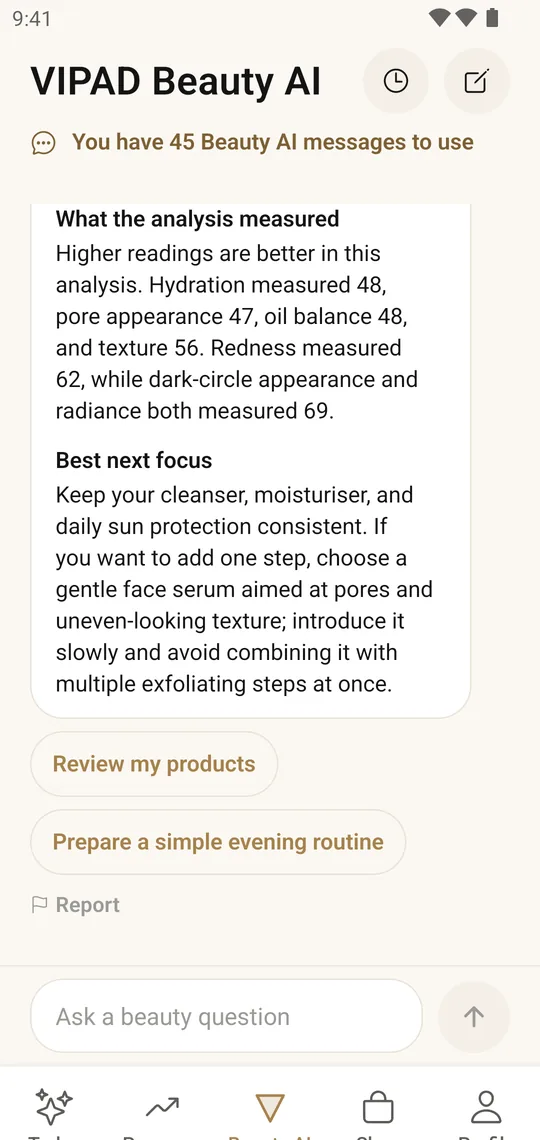
In the app
Beauty AI answers from your own results and the products in My Products before it suggests anything new.
The VIPAD Store follows the same rule: its suggestions start with what you already own. Products marked For you fit your results and preferences, each one explains why it is suggested, and when a product you own already suits a need, the Store says so. Buy Now takes you to the retailer if you decide to buy.
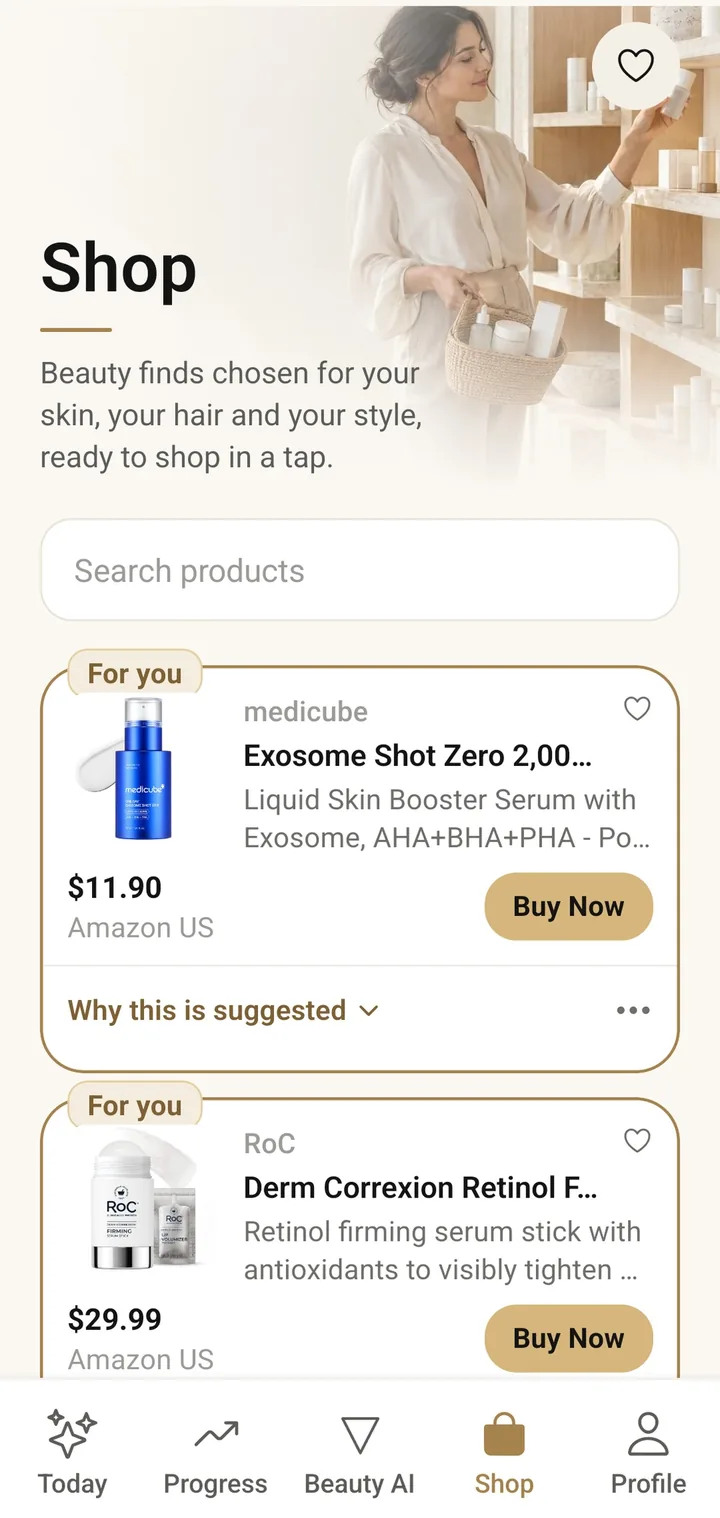
For you
Each For you product in the Shop shows why it is suggested for you.
For a fuller review of your routine, the Skin Care Plan tool builds a plan from a recent Skin Analysis, or from your answers alone if you have not done one. It shows where your products fit, which steps repeat each other and which steps may not go together. As with every VIPAD tool, the price in Credits is shown before it starts.
Letting go of what you do not need
If a product is unopened and still within its date, give it to a friend who will enjoy it. If it is opened and past its date, or it has changed in smell, color or texture, it is time to throw it away.
In My Products you can mark a product as finished or archive it without losing its history, so months later you still remember what it was and whether it worked for you. That memory is what keeps you from buying the same wrong product twice.
Use what you own first
My Products, Beauty AI and the VIPAD Store all start from your own shelf.