Glass skin routine: a realistic guide for every skin type
A glass skin routine for oily, dry and acne prone skin, step by step. What glass skin really looks like, what to expect and how to track your glow.
5 min read



A glass skin routine aims for skin that looks clear, bouncy and lit from inside, the kind of glow that catches the light on your cheekbones. The look comes from Korean skincare, and it gets a lot of attention online, usually in photos with perfect lighting and a filter or two.
Here is the honest version: what glass skin really means on a real face, a simple routine to get closer to it, and how to adjust that routine for oily, dry or acne prone skin.
What is glass skin, really?
Glass skin is not about having no pores or no texture. Every face has pores, and healthy skin still has texture up close. What people mean by glass skin is mostly two things: hydration and glow. Skin that holds water well reflects light more evenly, so it looks smoother and brighter.
So set the goal there. A good routine can help your skin look more hydrated, more even and glowier. It will not make pores disappear, and anything that promises that is selling a filter.
See your glow, not just guess it
Skin Analysis reads Glow, Moisture and Smoothness, and Progress shows how they change in VIPAD.
The Korean glass skin routine, step by step
The classic Korean version is known for having a lot of steps, but you do not need ten. The idea behind it is simple: layer light hydration, then seal it in. This version keeps the parts that do the work.
- Cleanse gently. Use an oil or balm cleanser at night if you wear sunscreen or makeup, then a mild gel or cream cleanser. Skin should feel clean, never tight.
- Hydrate in thin layers. Pat a watery toner or essence into damp skin. Two or three thin layers often feel better than one thick one.
- Add one serum. A hydrating serum suits most people, or pick one for your main goal. One is enough.
- Moisturize. A gel cream for oily skin, a richer cream for dry skin. This is the step that keeps the water in.
- Use sunscreen every morning. Sun is one of the fastest ways to dull a glow.
- Exfoliate gently, a couple of times a week at most. Overdoing it leaves skin rough and shiny in the wrong way.
Glow also depends on habits outside the bathroom: enough sleep, never sleeping in makeup, and leaving spots alone. None of those come in a bottle.
Glass skin routine for oily skin
Oily skin already has shine, so the goal is to trade greasy shine for a clean, hydrated glow. That means more water and less heavy oil.
- Use a gentle gel cleanser morning and night, and skip harsh scrubs that leave skin tight.
- Layer a light, watery toner or essence two or three times.
- Choose a gel or fluid moisturizer instead of skipping moisturizer.
- Pick a fluid or matte sunscreen you actually like wearing.
- Blot shine during the day instead of washing your face again.
A lot of people with oily skin find that once their skin feels properly hydrated, the shine looks fresher and less greasy.
Glass skin routine for dry skin
Dry skin needs the most help with the hydration half of glass skin. Layering matters more here, and so does sealing everything in.
- Cleanse with a cream or milk cleanser and lukewarm water, not hot.
- Press toner or essence into damp skin. Press, do not rub.
- Use a hydrating serum, then a cream moisturizer right away.
- At night, finish with a richer cream or a few drops of face oil.
- Keep exfoliation rare and gentle.
Glass skin routine for acne prone skin
Acne prone skin can still get a glow, but the routine should stay light and calm. Heavy layering and lots of new products at once make breakouts harder to keep track of.
- Keep layers thin and few. One hydrating toner and one light serum are plenty.
- Look for labels like non comedogenic or oil free on your moisturizer and sunscreen.
- Add one new product at a time and give it a couple of weeks before the next.
- Do not pick or squeeze spots. The marks they leave dull the look of skin.
- Keep oils and rich balms off the areas where you break out.
On acne prone skin, glass skin means calm and hydrated, not flawless. If breakouts are painful, deep or keep coming back, see a doctor. A skincare routine is not the right tool for that.
How to track your glow
Glow is hard to judge in the mirror. The lighting changes, your mood changes, and you see your face every day, so slow changes are easy to miss.
VIPAD Skin Analysis reads 8 things from one selfie, each scored from 0 to 100. For glass skin, three of them matter most: Glow, Moisture and Smoothness. Each one shows as Room to improve, Moderate, Good or Very good, so you know where you are starting.
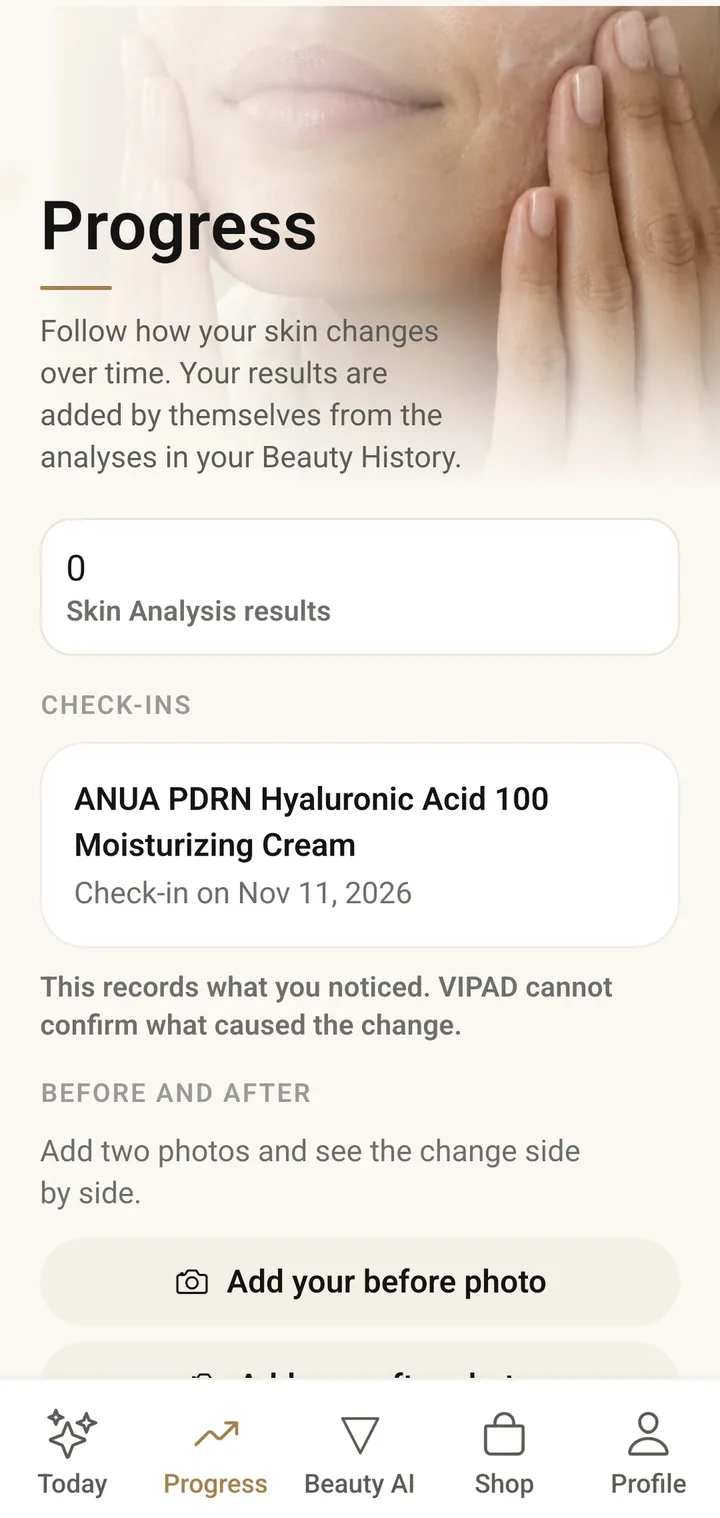
Progress then compares your results over 1, 3, 6 and 12 months. If your Moisture reading moves from Moderate to Good after a month of layering, you see it on the screen instead of relying on one lucky photo. These are cosmetic readings. VIPAD does not diagnose or treat any condition.
In the app
Progress lines up your Skin Analysis results, so you can see whether Glow, Moisture and Smoothness moved.
If you want help putting the routine together, Beauty AI can draft one from the products you already have in My Products, and Skin Care Plan builds a plan from your latest Skin Analysis.
How long does it take to get glass skin?
Hydration is the part you feel first. Skin often feels softer within a few days of layering. A steady glow takes longer, usually a few weeks of the same routine every day. Give it at least a month before you change anything.
Do you need 10 steps for glass skin?
No. Cleanse, hydrate, moisturize and protect cover most of it. Extra steps are fine if you enjoy them, but doing the same few steps every day beats a long routine you skip.
Can you get glass skin without makeup?
That is the whole point. Highlighter can fake the shine, but the routine is about the skin underneath looking hydrated and even on its own. Keep the goal real: a healthy glow, not a filter.
See your glow, not just guess it
Skin Analysis reads Glow, Moisture and Smoothness, and Progress shows how they change in VIPAD.