Personal Color Analysis: what your result means for makeup, hair and clothes
How Personal Color Analysis in VIPAD reads warm, cool or neutral from one photo, and how to use your best colors in your makeup, your hair and your wardrobe.
4 min read


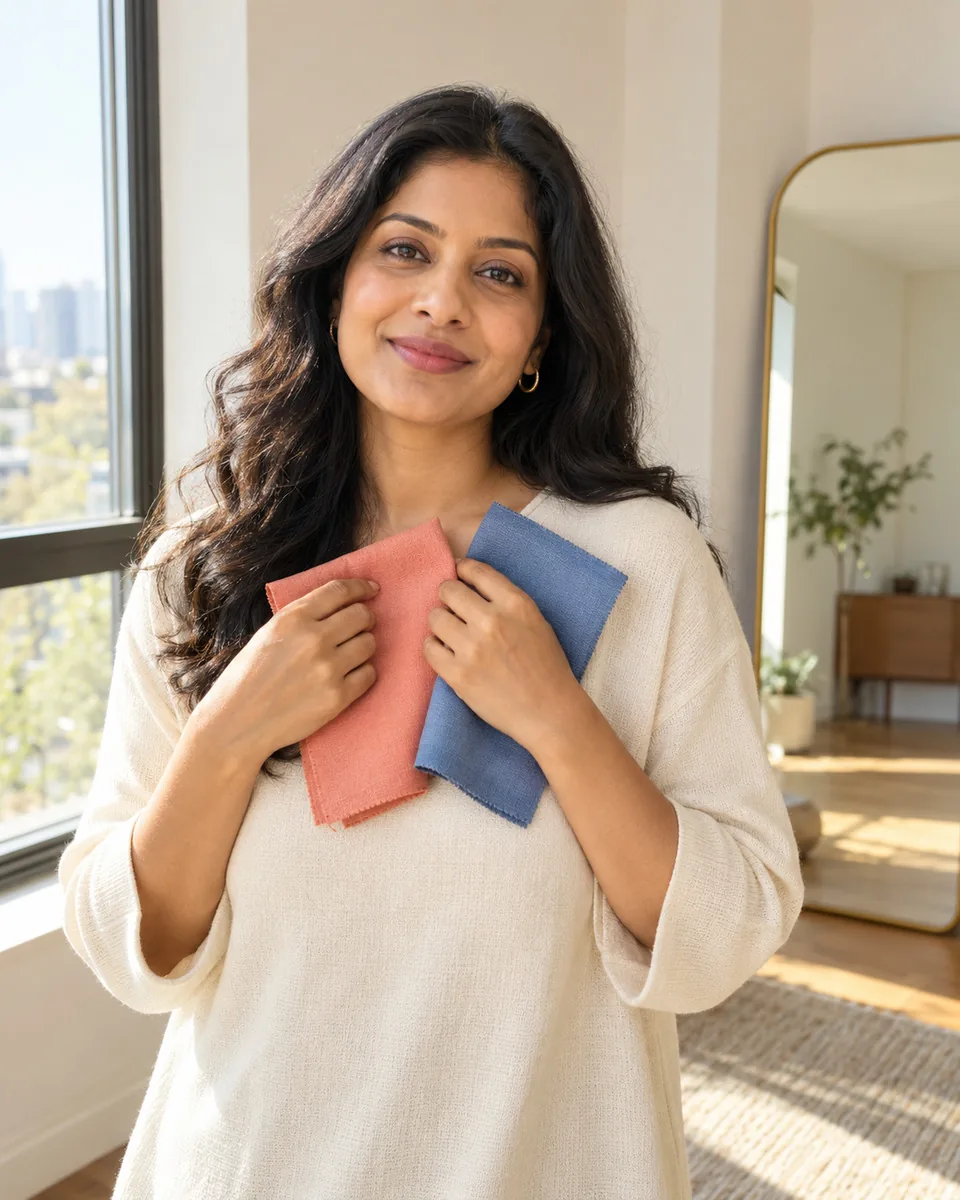
Some colors make you look rested even after a short night, and others make you look tired after a long one. The difference is rarely the color itself. It is how that color sits next to your skin, your eyes and your hair.
If you want to test your undertone at home first, our guide to finding your undertone covers the wrist, white and gold checks. This guide picks up where those checks stop: what a reading from a photo contains, how far to trust it and how to use it every day.
A few questions before the photo
Personal Color Analysis in VIPAD asks four short questions before you take or choose a photo. Each one exists because it changes how colors look in a picture.
- Your current hair color, so the reading knows what it is looking at, including a dyed vivid color.
- Makeup in the photo: none, light or full, because foundation and blush shift how skin reads.
- Whether the photo has a filter or edits, since filters often warm up or cool down a face.
- How bold you want your colors to be: soft, balanced or bold.
Lighting, makeup, filters and the camera's own color processing all change how colors look. Your answers help the reading take them into account, but a clear photo still matters most.
Find the colors that suit you
Personal Color Analysis, Makeup Planner and Beauty AI work together in VIPAD.
What the result tells you
- Warm, cool or neutral: the temperature that suits your coloring.
- Overall direction: a short description of your coloring as a whole.
- Best color families: where to start when you choose anything that sits near your face.
- Colors to use carefully: shades that can work, but need care in how and where you wear them.
- Makeup, hair and jewelry color families: the same reading turned into practical choices.
- Confidence and lighting confidence: how sure the reading is, and how much the light in your photo helped or got in the way.
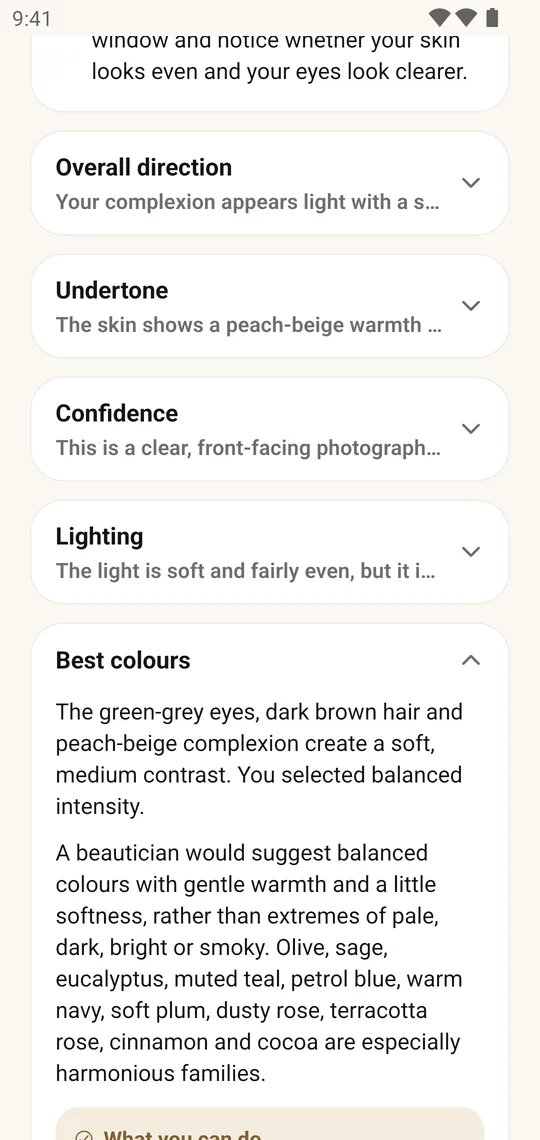
Your color reading
The overall direction, best colors, confidence and lighting, each explained in plain words.
Read the confidence lines first. If the reading says it was made with low confidence from this photo, the answer is not wrong, but it is worth taking a new photo in better light before you buy anything based on it.
A photo that reads well
Face a window in daylight, without direct sun. Remove heavy makeup if you can, skip filters, and wear a plain top in white, gray or a soft neutral, because a bright color under your chin reflects onto your skin.

Good light first
Soft daylight from the front gives the most honest color reading, while warm bulbs push every skin tone toward yellow.
Using your result in makeup
Temperature matters most where color touches skin directly: base, cheeks and lips. Your best color families tell you which direction to lean, and your intensity answer tells you how far.
- Warm: peach and apricot blush, bronze and golden eyeshadow, warm brown eyeliner and a golden highlighter.
- Cool: rose and berry blush, taupe, plum and gray eyeshadow, black or charcoal eyeliner and a pearly highlighter.
- Neutral: soft rose or muted peach blush, mid browns and mauves on the eyes, and a highlighter that is neither very gold nor very pink.
- Bronzer and contour: warm undertones usually suit a golden bronzer, cool undertones a softer, more neutral one.
From the result you can go straight to Makeup Planner, which builds a step by step plan for a natural, daily, evening, special occasion or photo ready look. Lipstick then lets you try a shade from your best color families on your own photo.
Using your result in hair
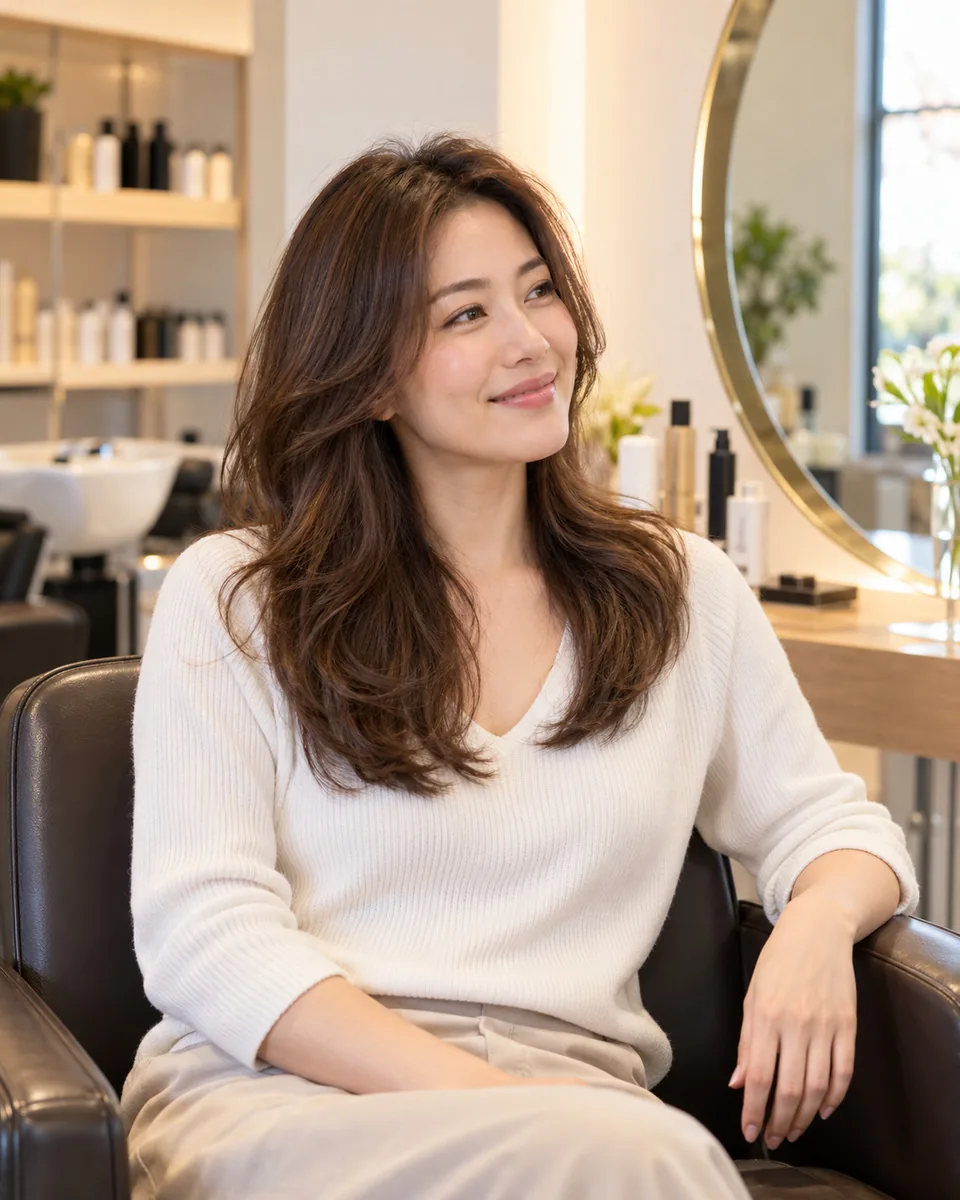
Hair frames the face, so a shade that fights your coloring is easy to notice. Your result lists the hair color families that suit you, which gives you and your colorist a starting point based on your own reading rather than a general chart. Think about depth as well as temperature: a change of one or two shades from your natural color usually looks softer than a big jump, especially near your brows. Hair Color lets you preview a family on your own photo before the appointment.
Using your result in clothes and jewelry
The colors that matter most are the ones closest to your face: tops, collars, scarves and earrings. Use your best color families there, and keep the colors to use carefully further away, in trousers, skirts, shoes or bags, where they change your face much less.
- Start small: one scarf or top in a best color shows you more than a full new wardrobe.
- Keep a color you love: add a best color near your face, such as a collar or necklace, and wear the difficult shade lower down.
- Metals: your jewelry color families tell you whether gold, silver or a mix is the easier choice.
- Neutrals count too: warm readings often suit cream, camel and olive, cool readings crisp white, navy and charcoal.
Where your result goes next
You choose whether to add your color temperature to your Beauty Profile. The reading can also feed Makeup Planner, Lipstick and Hair Color, and the products marked For you in the VIPAD Store, so the colors suggested there start from your result.
You can also ask Beauty AI to explain your latest Personal Color Analysis and which colors to choose first. It answers from your own reading, not from a general chart.
Guidance, not a rule
A color reading is guidance from one photo, never a fixed category you belong to. Your hair color changes, a tan changes your skin, and your taste matters as much as any palette. Use the result to make choices easier, and keep wearing the colors that make you happy.
Find the colors that suit you
Personal Color Analysis, Makeup Planner and Beauty AI work together in VIPAD.